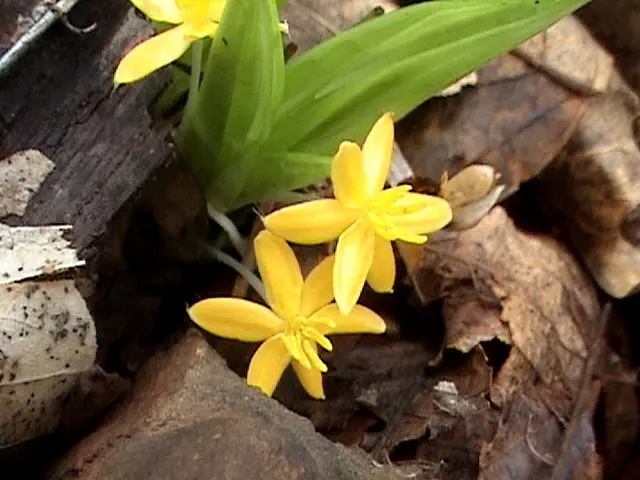
Photo: Viren Vaz (self), CC BY-SA 2.5 (via Wikimedia Commons)
Golden Eye Grass
Curculigo orchioides
Also known as Kali Musli, Black Musli, Golden Eye Lily, Weevil Root, Ayurvedic Musli
Key benefits
✦Traditional uses
✦In the villages of central and southern India, the slim, hairy-fingered root of Curculigo orchioides has long been dug in the dry months and dried for the year ahead, prized as a rasayana, one of the rejuvenating tonic herbs of Ayurveda. Healers traditionally reached for it to rebuild strength after long illness, to steady the reproductive system, and to ease the kind of weariness that settles into the bones with age. It carried a particular reputation as a tonic for men's vitality, though it also found its way into women's health formulas alongside gentler nervines. Beyond South Asia, related traditions in Africa and parts of China turned to the same modest little plant for much the same reason, as a quiet restorative rather than a dramatic cure.
How to grow & use it
✦The full apothecary for Golden Eye Grass
Traditional remedies and step-by-step preparations, a complete growing guide, and how to harvest, dry, and store it, all unlocked with HerbLens Unlimited.
- ✦Remedies & preparations
- ✦ Growing guide
- ✦Harvest & storage
From under $6 a month. Free plant identifications always included.
- ✦Ashwagandha
- ✦Shatavari
- ✦Safed Musli
- ✦Shatavari
- ✦Ashwagandha
“For a slow return to strength, when the body feels worn thin and needs coaxing back.”
Golden Eye Grass is often called Kali Musli, or black musli, to set it apart from the unrelated Safed Musli (Chlorophytum borivilianum), or white musli. The two are frequently confused in the herb trade despite belonging to entirely different plant families, and demand for both has made wild populations of Curculigo orchioides increasingly scarce in parts of India.
Traditionally used to influence hormonal vitality, so avoid during pregnancy and breastfeeding, and use caution alongside diabetes medication due to possible blood sugar effects.