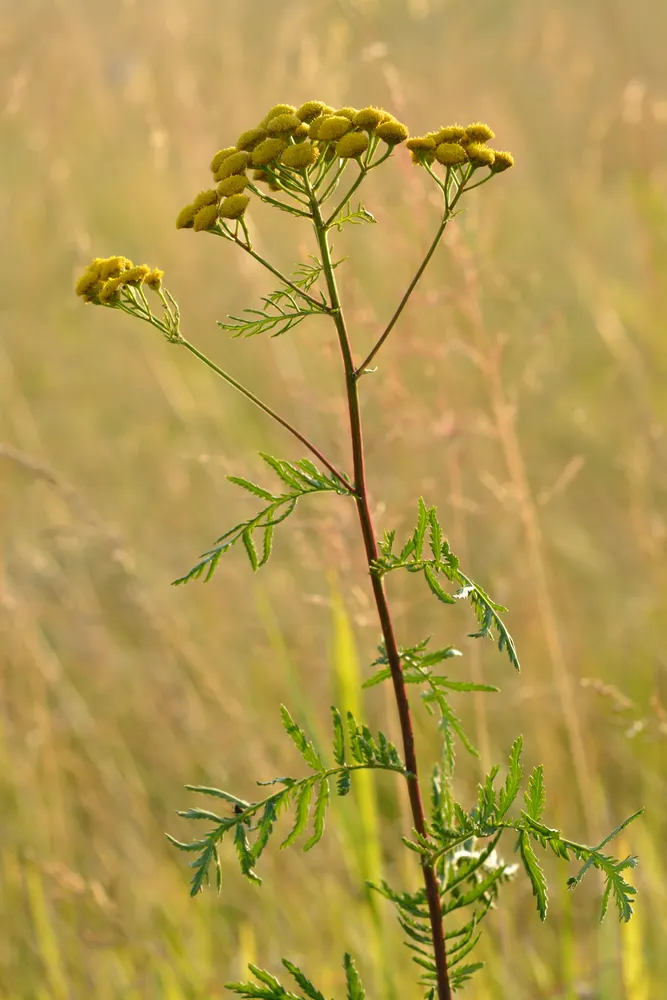
Photo: Ivar Leidus, CC BY-SA 3.0 (via Wikimedia Commons)
Tansy
Tanacetum vulgare
Also known as Common Tansy, Bitter Buttons, Golden Buttons, Cow Bitter
Key benefits
✦Traditional uses
✦Tansy has a long and tangled history in European folk practice. Its bitter, camphor-scented leaves were strewn on floors and packed into linens to keep flies and moths away, and sprigs were once tucked into meat and burial shrouds for the same reason. Cooks in medieval and Renaissance England baked the young leaves into bitter Lenten cakes, believed to cleanse the body after the long winter fast. Herbalists also turned to tansy as a vermifuge to expel intestinal worms and, more perilously, as an emmenagogue meant to bring on delayed menstruation, a use that carried real and sometimes fatal risk. Because of this history, tansy is remembered today more as a garden and folklore plant than as a kitchen or medicine cabinet staple.
How to grow & use it
✦The full apothecary for Tansy
Traditional remedies and step-by-step preparations, a complete growing guide, and how to harvest, dry, and store it, all unlocked with HerbLens Unlimited.
- ✦Remedies & preparations
- ✦ Growing guide
- ✦Harvest & storage
From under $6 a month. Free plant identifications always included.
- ✦Roses
- ✦Potatoes
- ✦Raspberries
- ✦Feverfew
- ✦Yarrow
“For the gardener who wants a patch of gold-button blooms that flies, moths, and deer all learn to avoid.”
Tansy takes its old folk name, bitter buttons, from its flowers, which look like tiny brass buttons scattered across the plant, and it was once so associated with Easter that entire cakes were named tansies after it.
Tansy is toxic and should not be ingested. Its essential oil and leaves contain thujone, a compound that in even modest amounts can cause seizures, liver and kidney damage, and other serious poisoning symptoms; the essential oil in particular has caused fatalities. Tansy has historically been used as an abortifacient, and this use has caused documented deaths and severe organ damage, so it is never safe for use during pregnancy, and it should also be avoided while breastfeeding and kept away from children and pets. Handling the fresh plant can cause contact dermatitis in sensitive individuals, and anyone with ragweed or related plant allergies should be cautious even around the dried flowers. This entry is offered for historical, botanical, and garden interest only, not as a guide to use. Please talk with a qualified healthcare provider before considering any herbal preparation, and treat tansy as a plant to admire and grow rather than to consume.