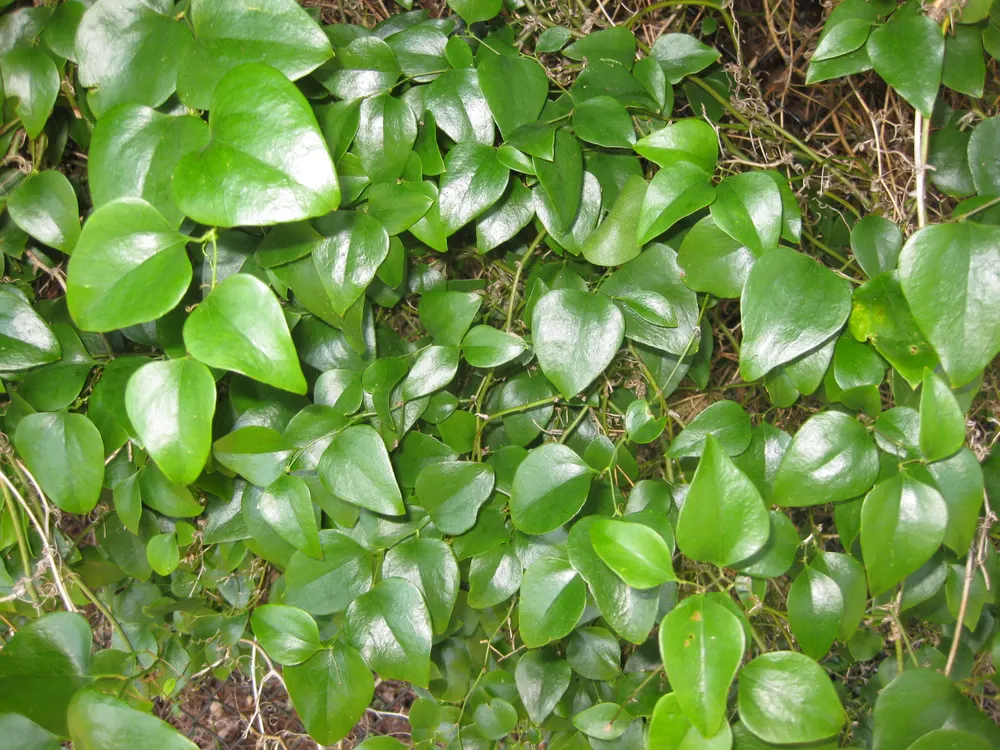
Photo: Fepup, Public domain (via Wikimedia Commons)
Common Greenbrier
Smilax rotundifolia
Also known as Roundleaf Greenbrier, Catbrier, Horsebrier, Bullbrier
Key benefits
✦Traditional uses
✦Long before it was tangled underfoot as a nuisance vine, greenbrier was gathered with purpose. Cherokee and other Southeastern peoples dug its tough, knotted roots to brew a tonic decoction, much as sarsaparilla was used elsewhere, and pounded the starchy root into a paste that was sometimes worked into a jelly or bread. The tender spring shoots, snapped off like wild asparagus, have fed foragers for generations, and the bruised leaves or root were traditionally pressed onto minor skin troubles as a soothing poultice. It earned its keep as both food and folk remedy in the same season.
How to grow & use it
✦The full apothecary for Common Greenbrier
Traditional remedies and step-by-step preparations, a complete growing guide, and how to harvest, dry, and store it, all unlocked with HerbLens Unlimited.
- ✦Remedies & preparations
- ✦ Growing guide
- ✦Harvest & storage
From under $6 a month. Free plant identifications always included.
- ✦Sarsaparilla
- ✦Burdock root
- ✦Yellow dock
- ✦Wild sarsaparilla (Aralia nudicaulis)
- ✦Burdock root
“When a bramble at the woods edge offers up its tender spring tips and an old-fashioned root tonic is what the season calls for.”
Some Southeastern foragers still call greenbrier shoots "brier tips" and cook them like green beans in early spring, a wild vegetable so mild that many people who eat it never realize they are dining on the same thorny vine that catches their sleeves in the woods.
Common greenbrier is not known to be toxic, and its young shoots have long been eaten as a wild vegetable. The vine has sharp recurved thorns, so take care when harvesting and confirm identification first.