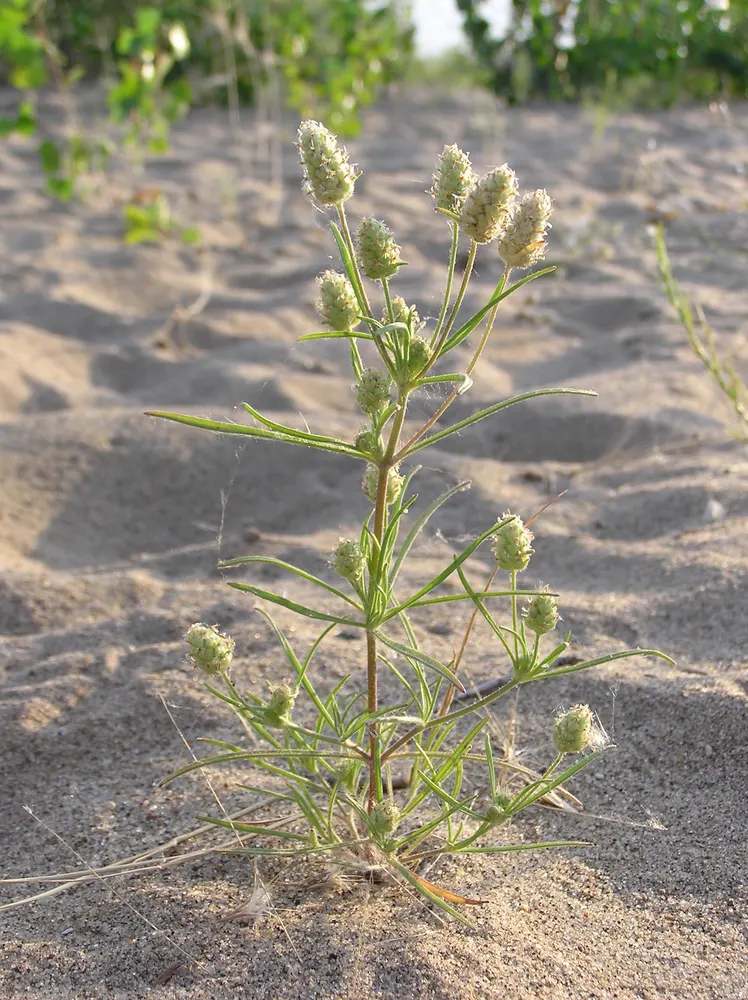
Photo: Le.Loup.Gris, CC BY-SA 3.0 (via Wikimedia Commons)
Psyllium
Plantago psyllium
Also known as Blond psyllium, Ispaghula, Fleaseed, French psyllium
Key benefits
✦Traditional uses
✦Psyllium's small, glossy seeds have been gathered for centuries across the Mediterranean and West Asia, where healers noticed that soaking them in water produced a slick, mucilaginous gel unlike almost any other seed. In Ayurvedic and Unani medicine, where it is known as ispaghula, the husk became a household remedy for sluggish digestion and was stirred into water each morning as a gentle daily habit rather than a strong medicine. European herbalists picked up the same practice, valuing psyllium as a mild, bulk-forming aid that worked with the body instead of forcing it, and its reputation as one of the gentlest fiber sources traveled with it into modern kitchens and pharmacies alike.
How to grow & use it
✦The full apothecary for Psyllium
Traditional remedies and step-by-step preparations, a complete growing guide, and how to harvest, dry, and store it, all unlocked with HerbLens Unlimited.
- ✦Remedies & preparations
- ✦ Growing guide
- ✦Harvest & storage
From under $6 a month. Free plant identifications always included.
- ✦Fennel seed
- ✦Ginger
- ✦Licorice root
- ✦Ground flaxseed
- ✦Chia seed
“For the mornings your digestion needs a gentle, steady hand rather than a hard push.”
The name psyllium comes from the Greek word psylla, meaning flea, because the tiny, shiny brown seeds were thought to resemble a cluster of fleas.
Always take psyllium with a full glass of water and more to follow, since the husk swells fast and can choke you or block your throat if swallowed dry. Avoid it if you have a bowel obstruction or trouble swallowing, and take it an hour or two apart from other medications since it can reduce their absorption. Handling the loose powder repeatedly can cause allergic reactions in sensitive people.