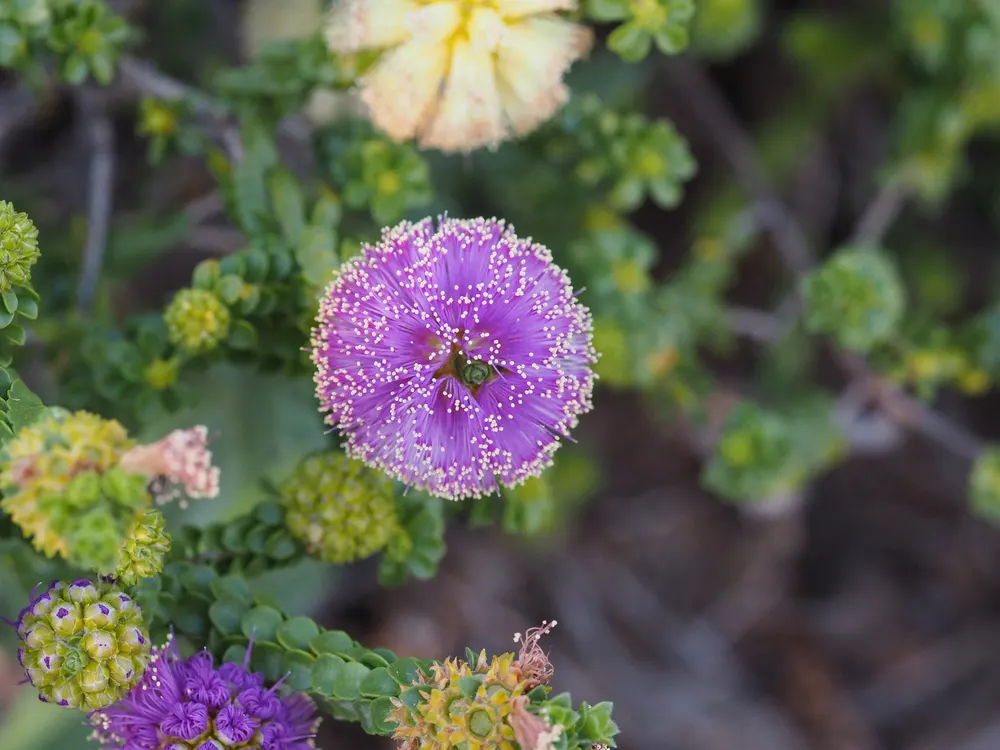
Photo: Geoff Derrin, CC BY-SA 4.0 (via Wikimedia Commons)
Purple-head Phymatocarpus
Phymatocarpus porphyrocephalus
Also known as Purple-headed Phymatocarpus, Porphyry Phymatocarpus
Key benefits
✦Traditional uses
✦Phymatocarpus porphyrocephalus is one of the quieter corners of the myrtle family, a small heathland shrub tucked into the sandplains of southwest Western Australia among its showier cousins, the featherflowers and starflowers. It has no documented history in Aboriginal bush medicine or in later settler herbalism, and it never made the leap into the tea tins and tincture bottles that carried so many of its Myrtaceae relatives into wide use. Its real story is a botanist's story, one of a small, localized genus that took its own quiet path through the ancient sands, noticed mostly by the people who go looking for wildflowers that most gardeners have never heard of.
How to grow & use it
✦The full apothecary for Purple-head Phymatocarpus
Traditional remedies and step-by-step preparations, a complete growing guide, and how to harvest, dry, and store it, all unlocked with HerbLens Unlimited.
- ✦Remedies & preparations
- ✦ Growing guide
- ✦Harvest & storage
From under $6 a month. Free plant identifications always included.
- ✦Featherflower (Verticordia)
- ✦Starflower (Calytrix)
- ✦Verticordia species
- ✦Calytrix species
“For the gardener chasing the rare and the little-known, not the common bloom.”
Its name is a small poem in Greek: phymato means a wart or swelling, karpos means fruit, and porphyra means purple, so Phymatocarpus porphyrocephalus roughly translates to the warty-fruited plant with the purple head, a nod to the little knobbed seed capsules beneath its dark rosy flower clusters.
There's no history of this plant being eaten or used medicinally and no safety data on it, so it shouldn't be taken internally. It's an uncommon Western Australian wildflower best left undisturbed in the wild.