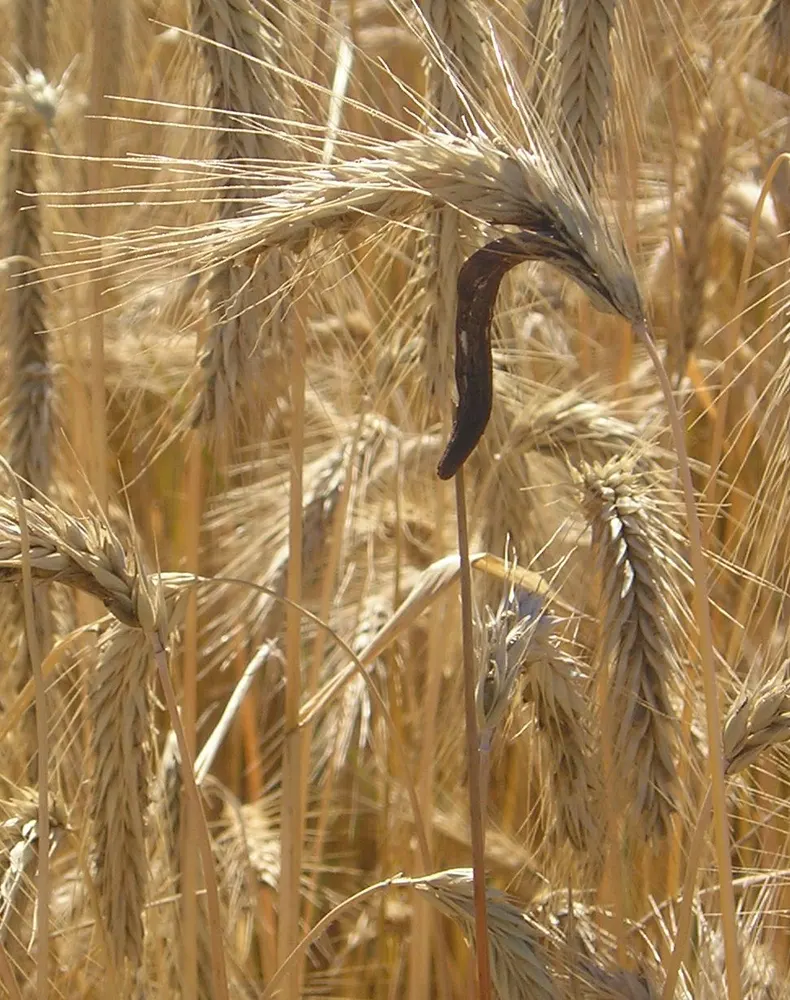
Photo: Dominique Jacquin, Public domain (via Wikimedia Commons)
Ergot
Claviceps purpurea
Also known as Rye Ergot, Ergot Fungus, Spurred Rye, Claviceps
Traditional uses
✦Ergot has one of the most dramatic and sobering stories in all of botanical history. For centuries, contaminated rye bread caused devastating outbreaks of a disease called St. Anthony's Fire across medieval Europe, marked by burning pain, gangrene, and convulsions, long before anyone understood a small purple-black fungus growing on the grain was to blame. Once its nature was understood, apothecaries and physicians in the 1800s and early 1900s began isolating it under careful laboratory control to hasten childbirth and to stem postpartum bleeding, work that eventually led to important modern medicines. It also holds a strange place in chemistry history, since one of its alkaloids was the starting point from which LSD was first synthesized in 1938. None of this is home apothecary work. Every historical use of ergot depended on precise pharmaceutical extraction and dosing that cannot be safely replicated outside a laboratory or clinical setting.
How to grow & use it
✦The full apothecary for Ergot
Traditional remedies and step-by-step preparations, a complete growing guide, and how to harvest, dry, and store it, all unlocked with HerbLens Unlimited.
- ✦Remedies & preparations
- ✦ Growing guide
- ✦Harvest & storage
From under $6 a month. Free plant identifications always included.
“A shadow on the grain, a warning from history: some plants belong in the record, not the cup.”
Some historians believe the strange visions, convulsions, and "bewitched" behavior reported during the Salem witch trials of 1692 may have been caused by rye bread contaminated with ergot growing in the damp fields of that unusually wet planting season, though the theory remains debated among scholars.
Ergot is genuinely dangerous and must never be eaten, brewed, or self-administered in any form. It contains potent alkaloids (including ergotamine and ergometrine) that cause ergotism, historically known as St. Anthony's Fire, which can bring severe vasoconstriction, gangrene of the extremities, convulsions, and death. It is a powerful uterine stimulant capable of inducing miscarriage or dangerous complications, making it extremely hazardous in pregnancy. It interacts dangerously with many medications, including triptans, other vasoconstrictors, and certain antibiotics. Contaminated grain is a recognized food safety hazard, and modern agriculture actively screens rye and other grains to remove it. Ergot-derived alkaloids exist today only as tightly controlled prescription pharmaceuticals administered by medical professionals in precise, monitored doses. This entry is provided for historical and botanical reference only. Never forage, consume, or prepare ergot in any home setting, and always consult a qualified healthcare professional for any condition rather than turning to this fungus.