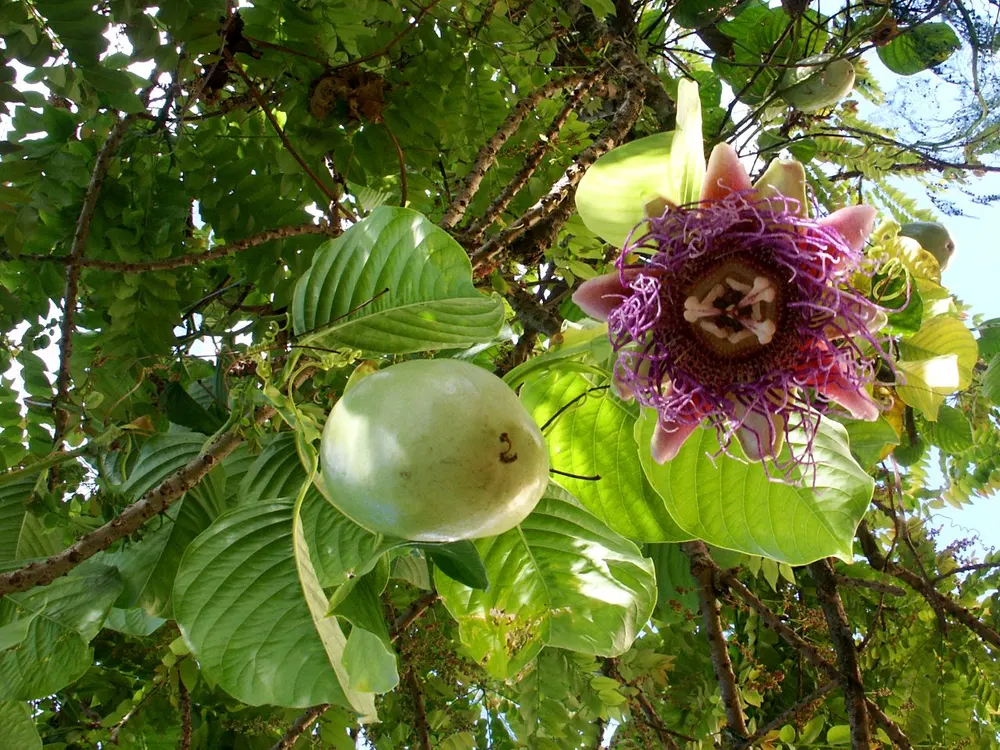
Photo: Fpalli, CC BY-SA 3.0 (via Wikimedia Commons)
Giant Granadilla
Passiflora quadrangularis
Also known as Giant Passion Fruit, Badea, Barbadine, Grenadille Géante, Tumbo
Key benefits
✦Traditional uses
✦Long before it appeared in tropical fruit markets, the giant granadilla was prized across its native range for its enormous, fragrant flowers and its cooling, thirst-quenching pulp. In folk traditions throughout Colombia, Venezuela, and the wider Caribbean, a mild tea made from the leaves was passed down as a gentle way to ease restlessness and settle the nerves before sleep, following the same quiet reputation held by its smaller cousin, the maypop. The vine itself was often grown right over a doorway or courtyard trellis, valued as much for its shade and beauty as for its fruit.
How to grow & use it
✦The full apothecary for Giant Granadilla
Traditional remedies and step-by-step preparations, a complete growing guide, and how to harvest, dry, and store it, all unlocked with HerbLens Unlimited.
- ✦Remedies & preparations
- ✦ Growing guide
- ✦Harvest & storage
From under $6 a month. Free plant identifications always included.
- ✦Chamomile
- ✦Lemon Balm
- ✦Maypop (Passiflora incarnata)
- ✦Maypop (Passiflora incarnata)
- ✦Lemon Balm
“A vine that offers shade, a spectacle of a flower, and a cooling fruit at the end of a long, warm day.”
A single giant granadilla flower can span the width of a saucer, and each night it opens just once, releasing a sweet scent that draws in moths and bats to pollinate it before closing by morning.
Only fully ripe fruit pulp should be eaten; unripe fruit, seeds in quantity, and raw leaves contain small amounts of cyanogenic compounds. Leaf tea has a traditional mild sedative effect and is best avoided in pregnancy or alongside sedative medication.