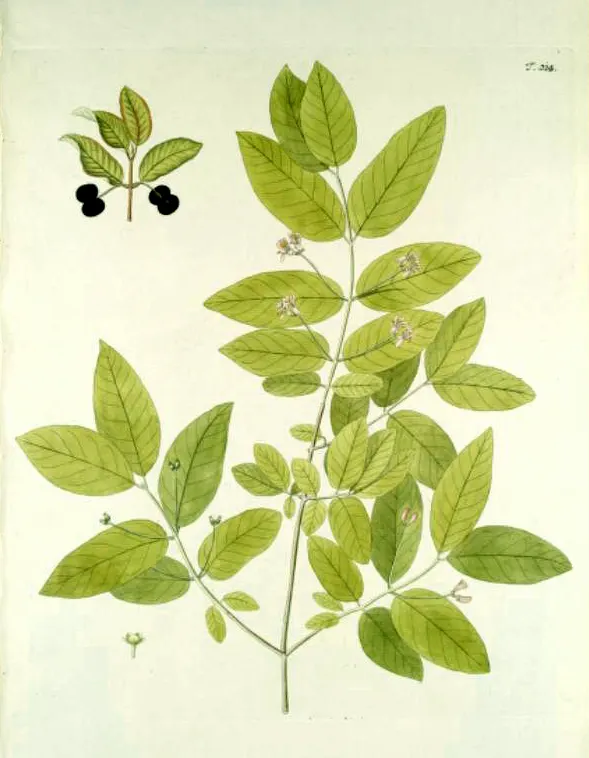
Photo: Nicolás Joseph Jacquin, Public domain (via Wikimedia Commons)
Black Honeysuckle
Lonicera nigra
Also known as Black-berried Honeysuckle
Key benefits
✦Traditional uses
✦Black honeysuckle has never carried the culinary or medicinal reputation of its edible honeysuckle cousins. Instead, its story belongs to the shady mountain understories where it has long grown quietly among spruce and beech, its twin pink flowers opening each spring for early bumblebees. Village gardeners in its native range have prized it as an unfussy hedge and border shrub for generations, valuing it for the very berries that make it unsafe to eat, since thrushes and other woodland birds strip them eagerly each autumn. Its place in tradition is really a gardener's and naturalist's one, a reliable, hardy shrub rather than an herb for the kitchen or medicine chest.
How to grow & use it
✦The full apothecary for Black Honeysuckle
Traditional remedies and step-by-step preparations, a complete growing guide, and how to harvest, dry, and store it, all unlocked with HerbLens Unlimited.
- ✦Remedies & preparations
- ✦ Growing guide
- ✦Harvest & storage
From under $6 a month. Free plant identifications always included.
“For a shade-dappled corner that wants spring blossoms, summer green, and a little wild birdsong come autumn.”
The two berries of Lonicera nigra ripen fused together at the base, like a pair of small dark eyes peeking out from the leaves, which is exactly how botanists tell it apart from the red-berried honeysuckles sharing its mountain slopes.
Black honeysuckle is toxic: its shiny black berries can cause nausea, vomiting, and diarrhea if eaten, and children are often drawn to their berry-like look. Keep the plant away from children and pets, and seek medical help right away if any part is swallowed.