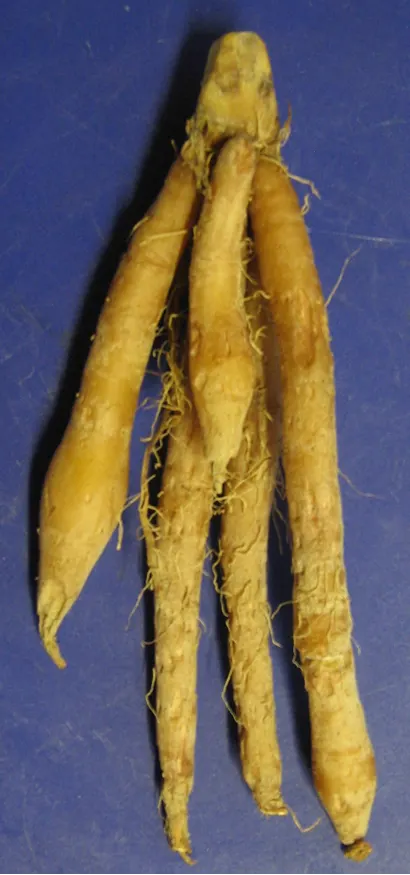
Photo: Kembangraps, Public domain (via Wikimedia Commons)
Fingerroot
Boesenbergia rotunda
Also known as Chinese keys, Chinese ginger, Krachai, Temu kunci, Lesser galangal (a common but inaccurate name)
Key benefits
✦Traditional uses
✦Long before it traveled beyond Southeast Asia, fingerroot was tucked into the cooking pots and medicine baskets of Thai, Malay, and Indonesian households alike. Its clustered, finger-like rhizomes were traditionally chewed or brewed into warming teas to settle an uneasy stomach, ease bloating after a rich meal, and calm coughs and colds. Village healers also pounded the fresh root into pastes applied to sore muscles and aching joints, treating it as both pantry staple and household remedy in one small, fragrant root. In Thailand it remains beloved above all as the secret note in kaeng tai pla, the fiery southern fish curry that would taste incomplete without it.
How to grow & use it
✦The full apothecary for Fingerroot
Traditional remedies and step-by-step preparations, a complete growing guide, and how to harvest, dry, and store it, all unlocked with HerbLens Unlimited.
- ✦Remedies & preparations
- ✦ Growing guide
- ✦Harvest & storage
From under $6 a month. Free plant identifications always included.
- ✦Ginger
- ✦Galangal
- ✦Lemongrass
- ✦Galangal
- ✦Fresh ginger
“When a heavy meal sits stubbornly and your stomach could use a little coaxing back to ease.”
Fingerroot earns its English name honestly: dig one up and its rhizome fans out into slender, tapering fingers radiating from a central knob, looking uncannily like a small clenched hand reaching up from the soil, quite unlike the single fat knuckle of common ginger.
Fingerroot is widely eaten as a spice in Southeast Asia and is safe in normal food amounts. Concentrated extracts are less studied and may interact with blood-thinning medication or affect blood sugar and blood pressure, so use those with care.