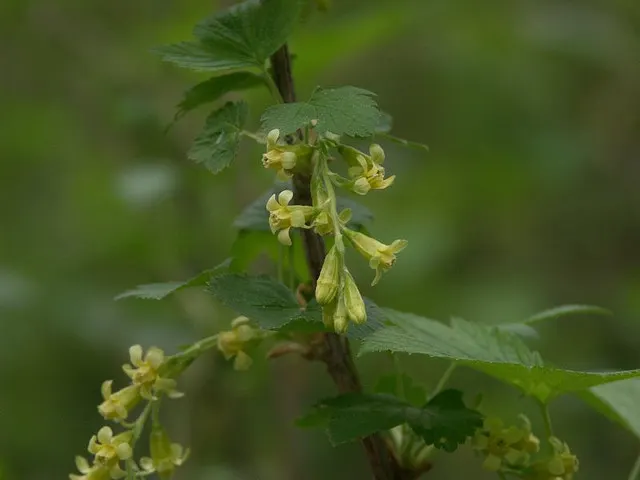
Photo: erutuon, CC BY-SA 2.0 (via Wikimedia Commons)
American Black Currant
Ribes americanum
Also known as Wild Black Currant, Eastern Black Currant, Wild Currant
Key benefits
✦Traditional uses
✦Long before orchards and jam jars, the small dark berries of the American black currant were gathered by Ojibwe, Cree, and other northern peoples, eaten fresh off the bush, dried for winter stores, or pounded into pemmican alongside meat and fat. The leaves were steeped into a tea used to settle the stomach and were also given to women around the time of childbirth, a practice passed carefully from one generation of herbalists to the next. Because the shrub grows wild and generously along creek banks and shaded fence lines, it became one of the reliable, unassuming plants a household could count on each summer. Its tart berries later found their way into settler kitchens, turned into syrups, jellies, and cordials that stretched a short harvest season into months of use.
How to grow & use it
✦The full apothecary for American Black Currant
Traditional remedies and step-by-step preparations, a complete growing guide, and how to harvest, dry, and store it, all unlocked with HerbLens Unlimited.
- ✦Remedies & preparations
- ✦ Growing guide
- ✦Harvest & storage
From under $6 a month. Free plant identifications always included.
- ✦Raspberry leaf
- ✦Rose hip
- ✦Elderberry
- ✦Black currant (Ribes nigrum)
- ✦Elderberry
“For the tart, dark-berried shrub that quietly fed forests full of foragers long before anyone called it a superfood.”
For much of the early 20th century, planting any currant bush, including this native species, was outlawed across large parts of the United States because currants can host white pine blister rust, a fungal disease deadly to white pines. Many of those bans have since been lifted, but pockets of restriction still linger today.
The berries are a safe, traditional food, but the leaves should not be eaten in large amounts, and because leaves were traditionally used around childbirth, they are best avoided during pregnancy.