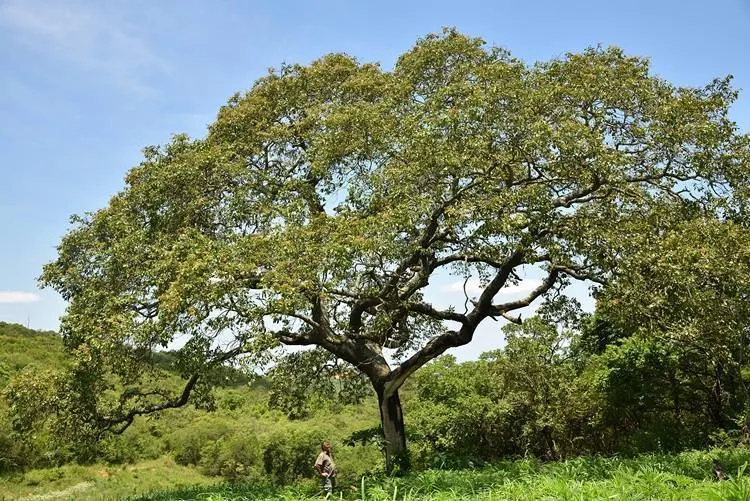
Photo: Willem Frost, CC BY-SA 4.0 (via Wikimedia Commons)
Mobola Plum
Parinari curatellifolia
Also known as Mobola Plum, Mupundu, Muula, Sand Apple, Mobola Plumtree
Key benefits
✦Traditional uses
✦Long before it had a scientific name, the mobola plum was a lifeline tree across the miombo woodlands of Zambia, Zimbabwe, Malawi, and Tanzania, its fleshy orange fruit gathered each year as one of the most important wild foods on the continent. Communities ate the ripe pulp fresh, pounded it into porridge, or dried it for the leaner months, while the oily kernel inside the hard stone was pressed for cooking and skin care. Healers across the region turned to the thick, corky bark and roots for teas and washes meant to settle the stomach and tend wounds, knowledge passed down through generations of foragers who knew exactly which tree, in which season, could be trusted. The tree itself became a marker of good land, since its presence signaled fertile soil and reliable shade for people and cattle alike.
How to grow & use it
✦The full apothecary for Mobola Plum
Traditional remedies and step-by-step preparations, a complete growing guide, and how to harvest, dry, and store it, all unlocked with HerbLens Unlimited.
- ✦Remedies & preparations
- ✦ Growing guide
- ✦Harvest & storage
From under $6 a month. Free plant identifications always included.
- ✦African wormwood (Artemisia afra)
- ✦Wild ginger
- ✦Lemongrass
- ✦Marula fruit
- ✦Baobab fruit pulp
“For the taste of the old woodland itself, sweet, sun-warmed, and gathered by hand.”
The mobola plum wears a thick, deeply corky bark that lets it shrug off the frequent grass fires that sweep through miombo woodland each dry season, so it often stands tall and untouched in scorched clearings where thinner-barked trees have burned away.
Only fully ripe fruit should be eaten, since unripe fruit is astringent and can upset the stomach. Bark and root preparations aren't well studied, so they're best avoided in pregnancy and breastfeeding.