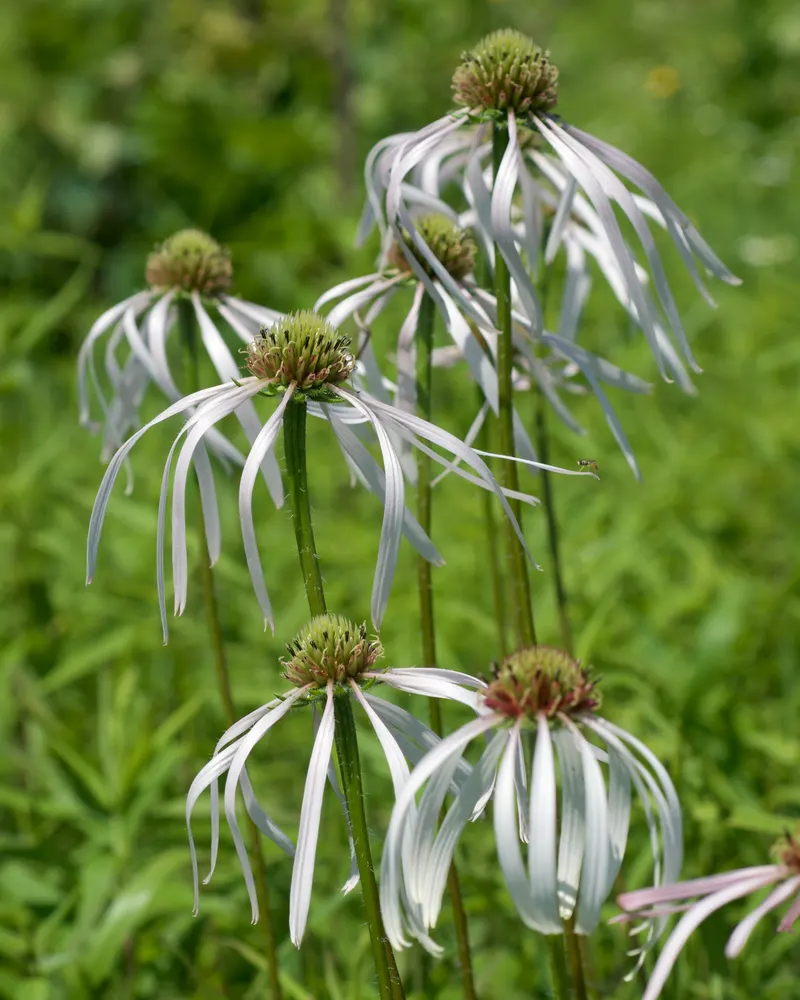
Photo: Eric Hunt, CC BY-SA 4.0 (via Wikimedia Commons)
Pale Purple Coneflower
Echinacea pallida
Also known as Pale Coneflower, Pale Echinacea, Prairie Coneflower
Key benefits
✦Traditional uses
✦Long before it appeared in tinctures on health store shelves, pale purple coneflower grew wild across the tallgrass prairies, where Plains nations including the Choctaw, Comanche, and Pawnee dug its tough taproot for treating infections, snakebite, toothache, and sore throat. It was often chewed straight from the ground, the root's tingling, numbing bite considered a sign of its strength. Alongside its cousins Echinacea purpurea and Echinacea angustifolia, it helped build the reputation Echinacea now carries across the world, valued in traditional practice as a general aid to the body's own defenses during illness and injury.
How to grow & use it
✦The full apothecary for Pale Purple Coneflower
Traditional remedies and step-by-step preparations, a complete growing guide, and how to harvest, dry, and store it, all unlocked with HerbLens Unlimited.
- ✦Remedies & preparations
- ✦ Growing guide
- ✦Harvest & storage
From under $6 a month. Free plant identifications always included.
- ✦Elderberry
- ✦Goldenseal
- ✦Licorice Root
- ✦Echinacea purpurea
- ✦Echinacea angustifolia
“For the quiet, dogged strength of the open prairie, petals bowed low but roots running deep.”
Pale purple coneflower's long, drooping petals set it apart from its bushier cousin Echinacea purpurea, and prairie foragers once used that graceful droop, along with its narrow grass-like leaves, as a field mark to tell the two apart before either one ever flowered in a garden.
Those allergic to ragweed, daisies, or other plants in the daisy family may react to pale purple coneflower. It stimulates the immune system, so it's best avoided by people with autoimmune conditions or on immunosuppressant medication, and isn't meant for continuous daily use.