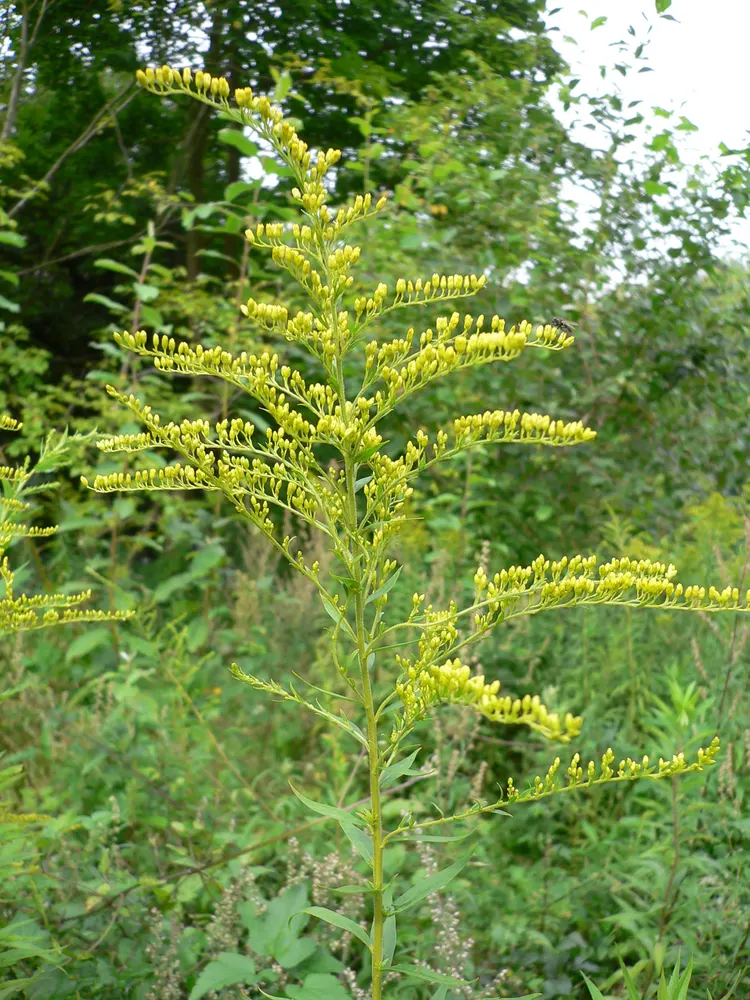
Photo: Georg Slickers, CC BY-SA 4.0 (via Wikimedia Commons)
Goldenrod
Solidago canadensis
Also known as Canada Goldenrod, Canadian Goldenrod, Common Goldenrod, Solidago
Key benefits
✦Traditional uses
✦Long before it was dismissed as a roadside weed, goldenrod was carried in the medicine bundles of dozens of Native American nations, who turned to its leaves and flowers for sore throats, aching joints, and troubled kidneys. Colonial settlers picked up the habit too, brewing the dried tops into a common household tea after real tea became scarce and costly. It has traditionally been used to support the urinary tract and ease the discomfort of the changing seasons, valued as a gentle, patient sort of plant, one that did its work quietly and asked little in return. Its cheerful late-season color made it as much a marker of the calendar as a medicine chest staple.
How to grow & use it
✦The full apothecary for Goldenrod
Traditional remedies and step-by-step preparations, a complete growing guide, and how to harvest, dry, and store it, all unlocked with HerbLens Unlimited.
- ✦Remedies & preparations
- ✦ Growing guide
- ✦Harvest & storage
From under $6 a month. Free plant identifications always included.
- ✦Nettle
- ✦Elderflower
- ✦Cleavers
- ✦Goldenrod may be used in place of horsetail for traditional urinary support
“The fields are turning gold and you want an old field-edge remedy for the season's last stretch.”
Goldenrod is often blamed for autumn hay fever, but the real culprit is usually ragweed, which blooms at the same time. Goldenrod's pollen is heavy and sticky, built to hitch a ride on bees rather than the wind, so it rarely travels far enough to reach your nose.
Goldenrod is not toxic, but as a daisy-family plant it can cause skin or respiratory sensitivity in those allergic to ragweed. Its mild diuretic effect means it is best avoided with kidney disease or diuretic medications.