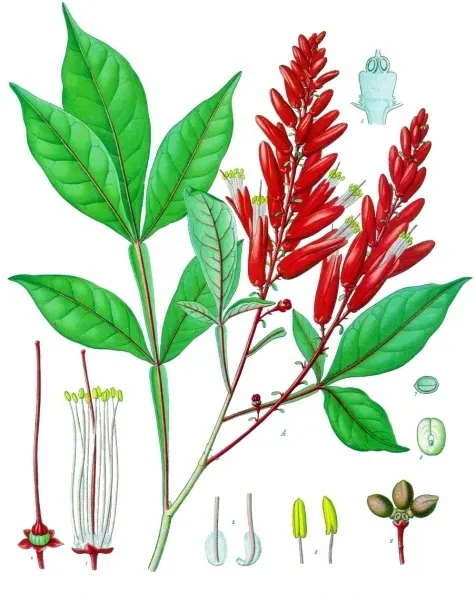
Photo: Franz Eugen Köhler, Köhler's Medizinal-Pflanzen, Public domain (via Wikimedia Commons)
Quassia (Bitterwood)
Quassia amara
Also known as Bitterwood, Amargo, Surinam Quassia, Bitter Ash, Quassia Wood
Key benefits
✦Traditional uses
✦Quassia amara, known to most herbalists simply as bitterwood or amargo, may be one of the bitterest substances found anywhere in the plant kingdom, so bitter that its compounds are detectable by taste at almost unimaginable dilutions. Healers across the Amazon basin and the Caribbean traditionally shaved its pale wood into cups and bowls, letting water stand in them until it took on the wood's intense bitterness, then drank it to rouse a tired appetite and settle the stomach. It also holds a long history as a folk remedy for fevers, including malarial fevers, which is how it first drew the attention of European physicians in the 1700s. That bitterness eventually made its way out of the sickroom and into the pantry, where quassia wood became a classic flavoring in tonic waters, vermouths, and aromatic bitters, a role it still quietly plays today.
How to grow & use it
✦The full apothecary for Quassia (Bitterwood)
Traditional remedies and step-by-step preparations, a complete growing guide, and how to harvest, dry, and store it, all unlocked with HerbLens Unlimited.
- ✦Remedies & preparations
- ✦ Growing guide
- ✦Harvest & storage
From under $6 a month. Free plant identifications always included.
- ✦Gentian root
- ✦Orange peel
- ✦Ginger
- ✦Gentian root
- ✦Wormwood
“When a tired appetite needs waking, and only the bitterest of barks will do.”
The genus name Quassia honors Graman Quassi, an 18th-century healer in Suriname who first revealed the wood's fever-treating properties, and whose knowledge of it eventually reached European botanists and gave the plant its scientific name.
Quassia is very bitter and potent, so use only small, traditional amounts; excessive or concentrated use can irritate the digestive tract and has affected fertility in studies, so avoid it during pregnancy, breastfeeding, or when trying to conceive. It is also used as a natural insecticide, so keep it away from the eyes and children.