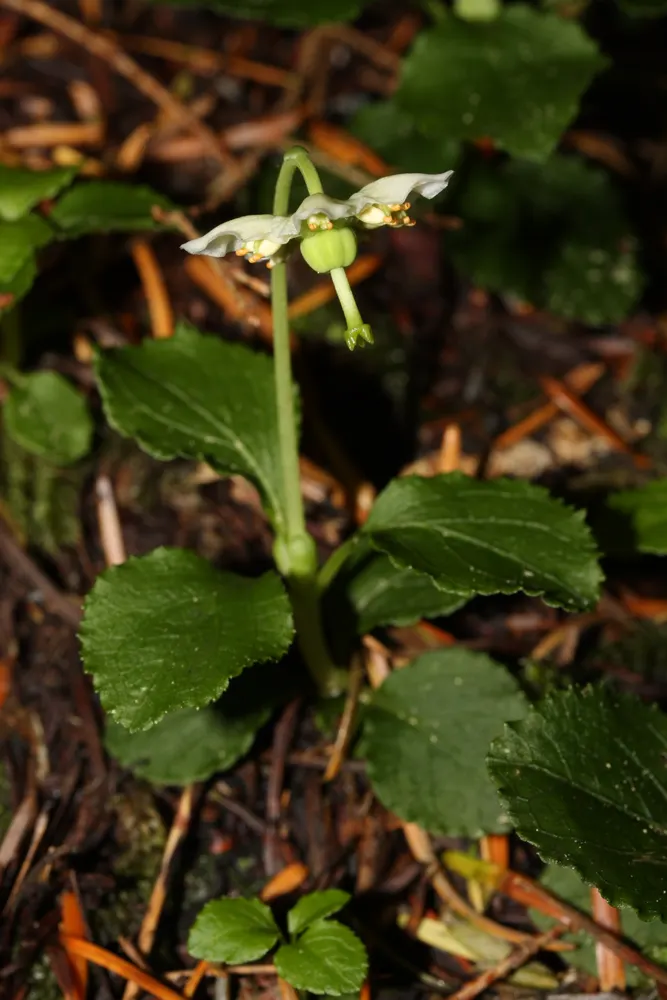
Photo: Walter Siegmund (talk), CC BY-SA 3.0 (via Wikimedia Commons)
One-flowered Wintergreen
Moneses uniflora
Also known as Single Delight, Wood Nymph, St. Olaf's Candlestick, One-flowered Pyrola
Key benefits
✦Traditional uses
✦One-flowered wintergreen has always charmed forest walkers far more than it ever filled an apothecary shelf, and records of any medicinal use are thin and scattered compared to those of its wintergreen cousins. In a few accounts from the Pacific Northwest and boreal forest, Indigenous peoples are recorded using the closely related pyrolas, and occasionally noting this plant among them, as a mild wash for cuts and minor sores, though the tradition is nowhere near as well documented as that of relatives like pipsissewa. Because the plant depends on an underground partnership with forest fungi and rarely survives being dug up or moved, it has always been treated more as a woodland treasure to notice quietly than an herb to gather in any quantity. Its truest legacy is botanical rather than medicinal, a single perfect flower that gave the genus its Latin name, meaning solitary delight.
How to grow & use it
✦The full apothecary for One-flowered Wintergreen
Traditional remedies and step-by-step preparations, a complete growing guide, and how to harvest, dry, and store it, all unlocked with HerbLens Unlimited.
- ✦Remedies & preparations
- ✦ Growing guide
- ✦Harvest & storage
From under $6 a month. Free plant identifications always included.
- ✦Twinflower (Linnaea borealis)
- ✦Pyrola (wintergreen)
- ✦Wood sorrel
- ✦Pipsissewa (Chimaphila umbellata)
- ✦Round-leaved wintergreen (Pyrola rotundifolia)
“For the hush of an old forest floor, and a single white star nodding low in the moss.”
Moneses uniflora cannot live on sunlight alone. Its roots tap into underground fungal threads shared with nearby trees, quietly borrowing sugar the way its shadowy cousins, the leafless mycoheterotrophic orchids, do. That hidden partnership is exactly why the plant almost never survives being dug up and replanted in a garden.
There's no reliable evidence that one-flowered wintergreen is safe to eat, and it isn't an established herb. It's also rare in parts of its range and depends on a fungal partnership to survive, so digging or picking it usually kills it.