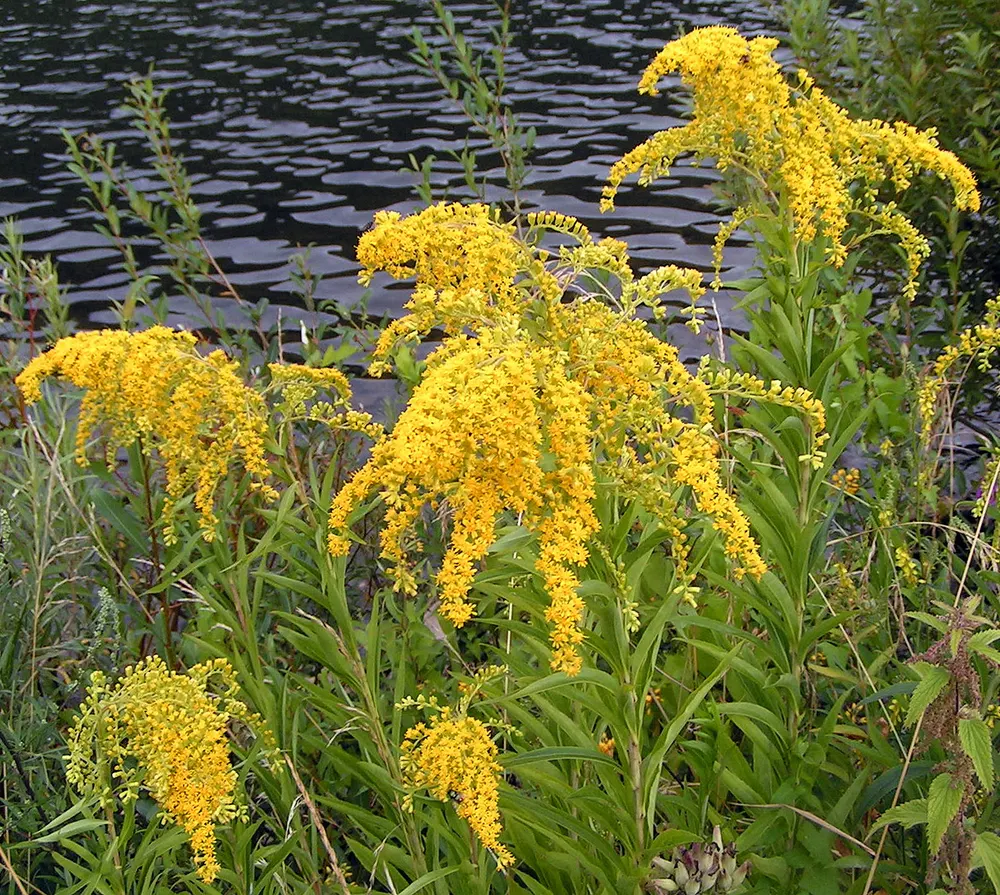
Photo: CC BY-SA 3.0 (via Wikimedia Commons)
Giant Goldenrod
Solidago gigantea
Also known as Late Goldenrod, Smooth Goldenrod, Tall Goldenrod
Key benefits
✦Traditional uses
✦Long before it was dismissed as a roadside weed, giant goldenrod was gathered by many Native American nations, who steeped the leaves and flowers into teas for the kidneys and bladder, and chewed or poulticed the leaves over wounds to help them close cleanly. Eclectic physicians of the nineteenth century carried it in their satchels as a reliable diuretic and a friend to the urinary tract, brewing the golden sprays into infusions for aching joints and sluggish kidneys. It traveled from field to farmhouse kitchen, valued not for spectacle but for steady, humble service, the kind of plant a household simply kept on hand.
How to grow & use it
✦The full apothecary for Giant Goldenrod
Traditional remedies and step-by-step preparations, a complete growing guide, and how to harvest, dry, and store it, all unlocked with HerbLens Unlimited.
- ✦Remedies & preparations
- ✦ Growing guide
- ✦Harvest & storage
From under $6 a month. Free plant identifications always included.
- ✦Nettle
- ✦Cleavers
- ✦Yarrow
- ✦Goldenrod species such as Solidago canadensis or Solidago virgaurea
“For the golden haze that lights up a fall meadow, and the quiet, dependable herb hiding inside it.”
Thomas Edison spent years experimenting with goldenrod as a domestic source of rubber, and he once gave Henry Ford a Model T fitted with tires made from goldenrod latex.
As a daisy-family plant it may cross-react with ragweed or chamomile allergies, though goldenrod itself isn't a common cause of hay fever since it's insect-pollinated. Its diuretic effect calls for caution with kidney, heart, or circulatory conditions, and it's best avoided during pregnancy and nursing.