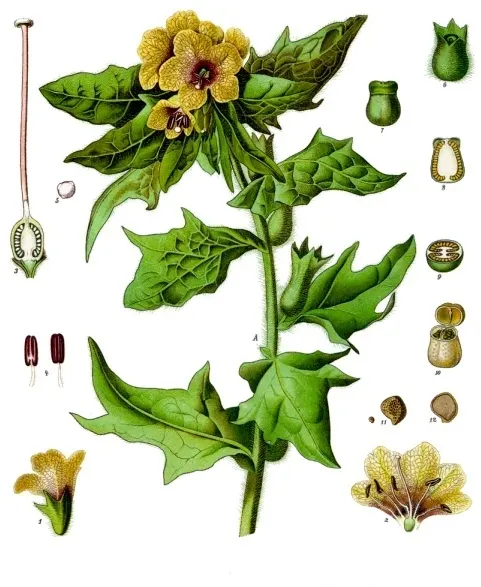
Photo: Franz Eugen Köhler, Köhler's Medizinal-Pflanzen, Public domain (via Wikimedia Commons)
Henbane
Hyoscyamus niger
Also known as Black Henbane, Stinking Nightshade, Hog's Bean, Devil's Eye
Traditional uses
✦Henbane has one of the oldest and most tangled histories of any plant in Western herbal lore, named by the Anglo-Saxons for the way it could sicken or kill poultry. Ancient Greek and medieval physicians used it cautiously as a sedative and pain reliever, and it was a favored ingredient in the so-called flying ointments and sleeping draughts of medieval Europe, prized and feared in equal measure. It also has a documented, darker history as a poison, most famously said to have been used in early twentieth century England in a notorious murder case. None of this history makes the plant safe to handle casually today, and its old uses belong to physicians working under very different standards than modern herbalism.
How to grow & use it
✦The full apothecary for Henbane
Traditional remedies and step-by-step preparations, a complete growing guide, and how to harvest, dry, and store it, all unlocked with HerbLens Unlimited.
- ✦Remedies & preparations
- ✦ Growing guide
- ✦Harvest & storage
From under $6 a month. Free plant identifications always included.
- ✦Chamomile (for gentle, traditional calming support)
- ✦Valerian (for traditional sleep support)
“A plant to know by sight and leave standing exactly where it grows.”
Henbane seeds were found scattered in Neolithic burial sites and Bronze Age graves across Europe, suggesting the plant's strange, dream-troubling reputation stretches back thousands of years before it ever appeared in a medieval physician's cabinet.
Henbane is genuinely poisonous and should never be ingested, brewed, smoked, or applied in any home preparation. Every part of the plant contains potent tropane alkaloids, chiefly hyoscyamine, scopolamine, and atropine, the same family of compounds found in datura and deadly nightshade. Even small amounts can cause a racing heart, dilated pupils, hallucinations, delirium, seizures, coma, and death, and there is no reliable "safe dose" for a home user to judge. It is dangerous to children and pets who might mistake the seeds or foliage for something edible, and it carries serious risk during pregnancy and for anyone with heart conditions, glaucoma, or on medications affecting the nervous system. This entry is offered for identification and historical interest only. If you encounter henbane growing, admire it from a distance, keep children and animals away, and never harvest, taste, or prepare it. Any question about tropane alkaloid poisoning is a matter for emergency medical care, not home remedy, and any interest in this plant's history is best pursued through a qualified toxicologist, botanist, or medical professional.