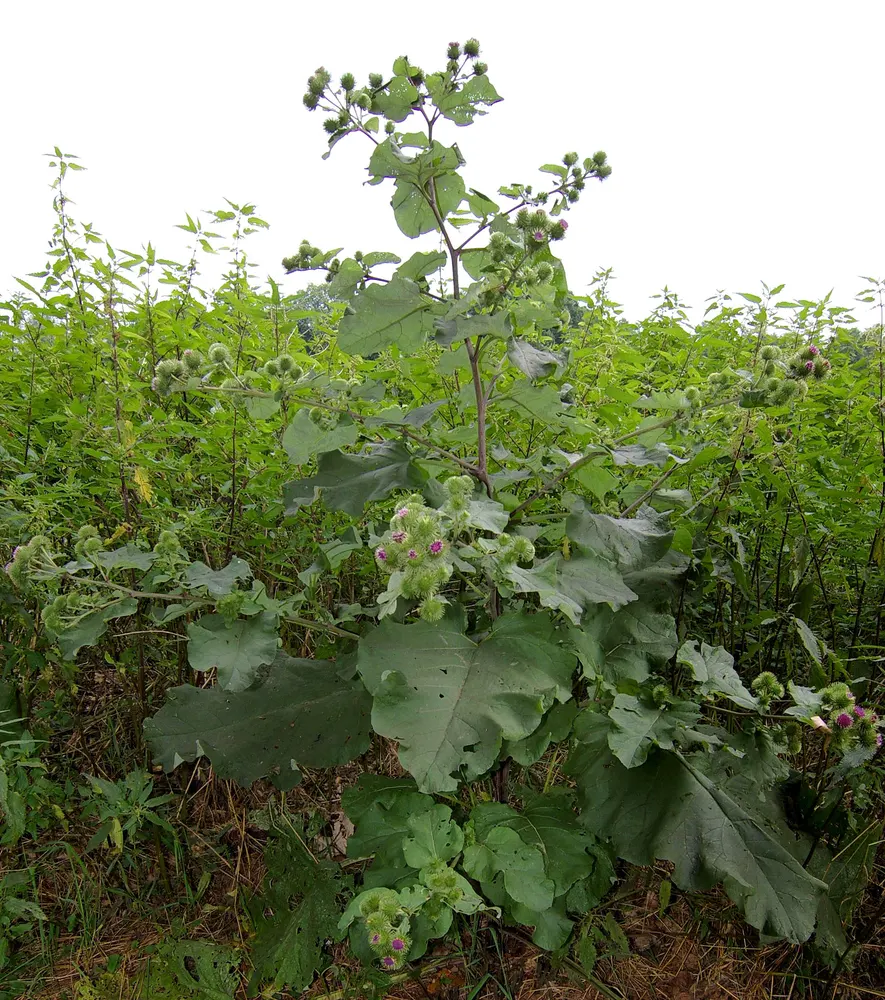
Photo: Christian Fischer, CC BY-SA 3.0 (via Wikimedia Commons)
Burdock
Arctium lappa
Also known as Gobo, Great Burdock, Beggar's Buttons, Niu Bang Zi, Lappa
Key benefits
✦Traditional uses
✦Burdock root has been eaten and brewed for centuries on nearly every continent it reached. In Traditional Chinese Medicine it is called niu bang zi and has long been used to support digestion and clear heat from the body, while European herbalists reached for it as a classic spring blood purifier and skin tonic after a long winter of heavy food. In Japan, the same root is simply dinner, known as gobo and simmered into soups and braised dishes for its earthy sweetness. Beneath all these traditions runs a common thread, a homely root trusted to cleanse gently and nourish deeply rather than to shock the system.
How to grow & use it
✦The full apothecary for Burdock
Traditional remedies and step-by-step preparations, a complete growing guide, and how to harvest, dry, and store it, all unlocked with HerbLens Unlimited.
- ✦Remedies & preparations
- ✦ Growing guide
- ✦Harvest & storage
From under $6 a month. Free plant identifications always included.
- ✦Dandelion root
- ✦Yellow dock
- ✦Milk thistle
- ✦Dandelion root
- ✦Yellow dock
“When you want a humble, grounding root to steady digestion and support skin from the inside out.”
Burdock's clingy, hooked burrs inspired the invention of Velcro. In 1941, Swiss engineer George de Mestral examined the burrs stuck to his dog's fur under a microscope and copied their tiny hooks to create the hook-and-loop fastener.
Burdock root is a common vegetable and safe to eat in food amounts, but wild roots have occasionally been confused with toxic look-alikes, so foragers should be certain of identification. It has traditionally been avoided in pregnancy, may lower blood sugar, and can cause reactions in those allergic to ragweed or related plants.