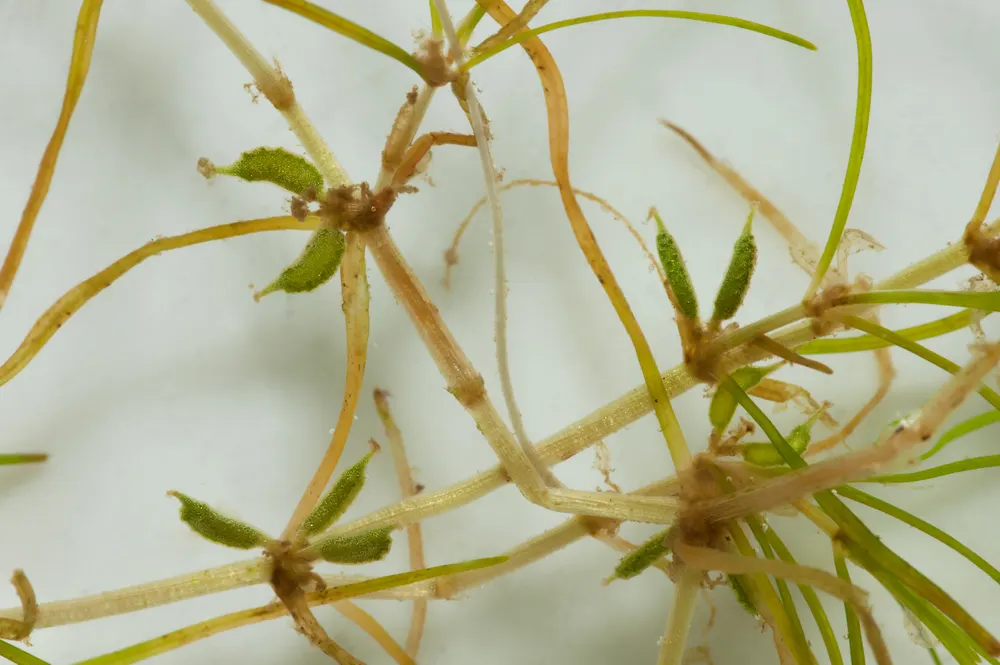
Photo: Christian Fischer, CC BY-SA 3.0 (via Wikimedia Commons)
Horned Pondweed
Zannichellia palustris
Also known as Horned Pondweed, Zannichellia
Key benefits
✦Traditional uses
✦Horned pondweed has never held a place in traditional human herbalism or cooking, and honest field guides say so plainly rather than stretching for a use that was never there. Its real traditional value has always belonged to the water itself: naturalists and waterfowlers have long recognized its slender green mats as prime feeding grounds for ducks, especially canvasbacks and other diving species that relish its seeds and foliage. Where it grows thick and healthy, it has traditionally been read as a good sign, an indicator of clean, unpolluted water welcoming to fish, insects, and birds alike. It earns its place in an apothecary atlas not as a remedy, but as a quiet keystone of the wetlands many other medicinal and wild plants depend on.
How to grow & use it
✦The full apothecary for Horned Pondweed
Traditional remedies and step-by-step preparations, a complete growing guide, and how to harvest, dry, and store it, all unlocked with HerbLens Unlimited.
- ✦Remedies & preparations
- ✦ Growing guide
- ✦Harvest & storage
From under $6 a month. Free plant identifications always included.
- ✦Hornwort (Ceratophyllum demersum)
- ✦Elodea (Elodea canadensis)
- ✦Hornwort
- ✦Elodea
“For the quiet pond that tends itself, one green thread at a time.”
Horned pondweed gets its common name from its small, curved, beak-tipped fruits, which look like tiny horns clustered along the stem, and it is one of the most widespread aquatic plants on earth, found on every continent except Antarctica.
Not established as a food or medicine and not known to be toxic, but it's easily confused with similar underwater pondweeds, so it isn't safe to gather and eat.