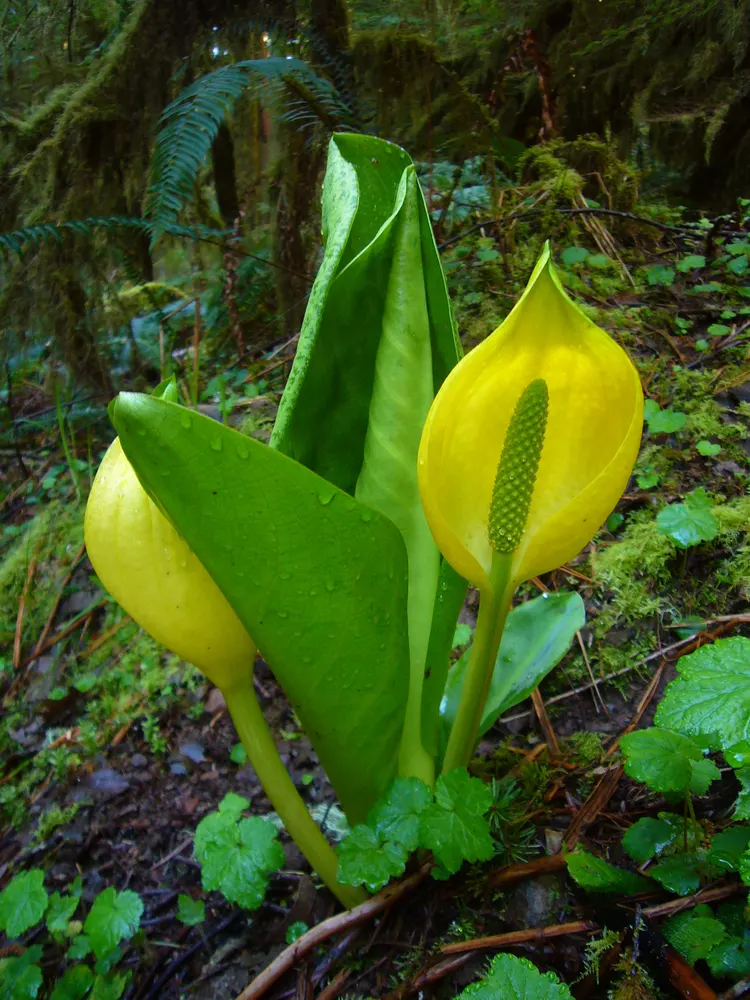
Photo: Martin Bravenboer, Public domain (via Wikimedia Commons)
Western Skunk Cabbage
Lysichiton americanus
Also known as Swamp Lantern, Yellow Skunk Cabbage, Skunk Weed
Key benefits
✦Traditional uses
✦Long before it earned its unglamorous common name, western skunk cabbage held real, practical value for the Indigenous peoples of the Pacific Northwest coast. Its enormous waxy leaves were used as natural wrapping and lining for berries, roots, and fish, both for cooking over coals and for storage, since the broad leaves held moisture and shape better than almost anything else in the forest. In lean, difficult seasons, the root was sometimes processed at length through drying and cooking by some coastal and interior groups as an emergency food of last resort, a practice born of hardship rather than everyday use, and not one that carried forward as a safe or common preparation. Today the plant is better known and appreciated as one of the very first signs of the growing season, its golden spathes pushing up through late snow while the rest of the forest still sleeps.
How to grow & use it
✦The full apothecary for Western Skunk Cabbage
Traditional remedies and step-by-step preparations, a complete growing guide, and how to harvest, dry, and store it, all unlocked with HerbLens Unlimited.
- ✦Remedies & preparations
- ✦ Growing guide
- ✦Harvest & storage
From under $6 a month. Free plant identifications always included.
“For the first bold blaze of yellow to melt through late snow, and the low hum of flies that answer it.”
Western skunk cabbage is one of the few plants in North America capable of true thermogenesis. It can raise the temperature inside its flowering spathe well above the surrounding air, melting through late snow and helping carry its skunky scent out to the early flies and beetles that pollinate it.
All parts of western skunk cabbage contain sharp, needle-like calcium oxalate crystals. Chewing or eating any part raw causes intense burning, stinging, and swelling of the lips, tongue, mouth, and throat, and can seriously irritate the digestive tract; the sap can also irritate skin and eyes on contact. This is not a plant to forage, taste, or prepare for eating or drinking under any circumstances, including the historical emergency preparations noted in its traditional history, which are not safe to replicate today. Keep curious children and pets away from the leaves and roots. As always, talk with a qualified healthcare professional or a trained botanist before handling or using any wild plant.