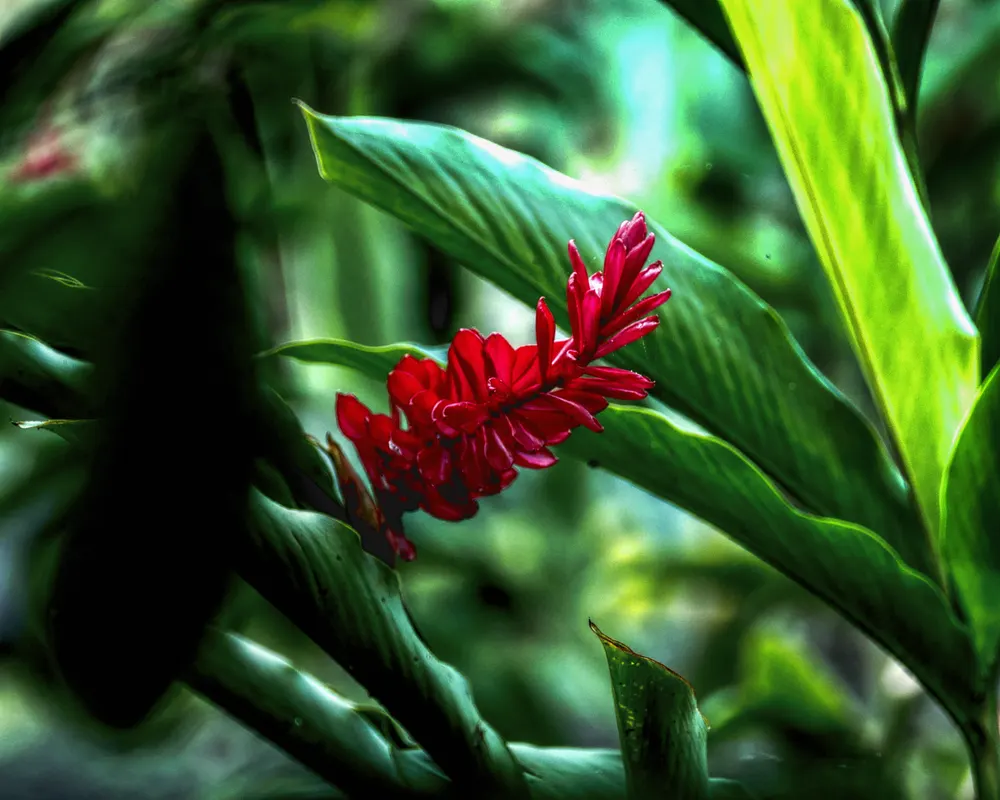
Photo: Octave Fargier, CC BY 2.0 (via Wikimedia Commons)
Red Ginger
Alpinia purpurata
Also known as Ostrich Plume, Pink Cone Ginger, Jungle Queen (cultivar name), Wax Ginger
Key benefits
✦Traditional uses
✦Long before it became a florist's favorite, red ginger held a cherished place in the gardens and ceremonies of the Pacific Islands, where its sturdy red plumes were woven into leis, worn in the hair, and used to mark celebrations and welcome guests. It belongs to the same rhizome rich family as true ginger and galangal, and in parts of its native range the rhizome has occasionally found its way into folk remedies for everyday complaints in the manner of its more famous cousins. Its greater legacy, though, has always been visual and ceremonial rather than medicinal, a plant grown to be given, worn, and admired.
How to grow & use it
✦The full apothecary for Red Ginger
Traditional remedies and step-by-step preparations, a complete growing guide, and how to harvest, dry, and store it, all unlocked with HerbLens Unlimited.
- ✦Remedies & preparations
- ✦ Growing guide
- ✦Harvest & storage
From under $6 a month. Free plant identifications always included.
- ✦Zingiber officinale (true ginger)
- ✦Heliconia
- ✦Hedychium (ginger lily)
- ✦Etlingera elatior (torch ginger)
- ✦Alpinia galanga (galangal)
“When you want a corner of the garden that looks like it is always mid celebration.”
The vivid red "flower" of red ginger is not really a flower at all. It is a cluster of tough, waxy bracts, modified leaves that hold the true flowers, which are small, white, and easy to miss, tucked shyly between the showy red plumes.
Red ginger is not known to be toxic, but unlike its relatives it has no established food or medicinal use, so it is best treated as an ornamental plant.