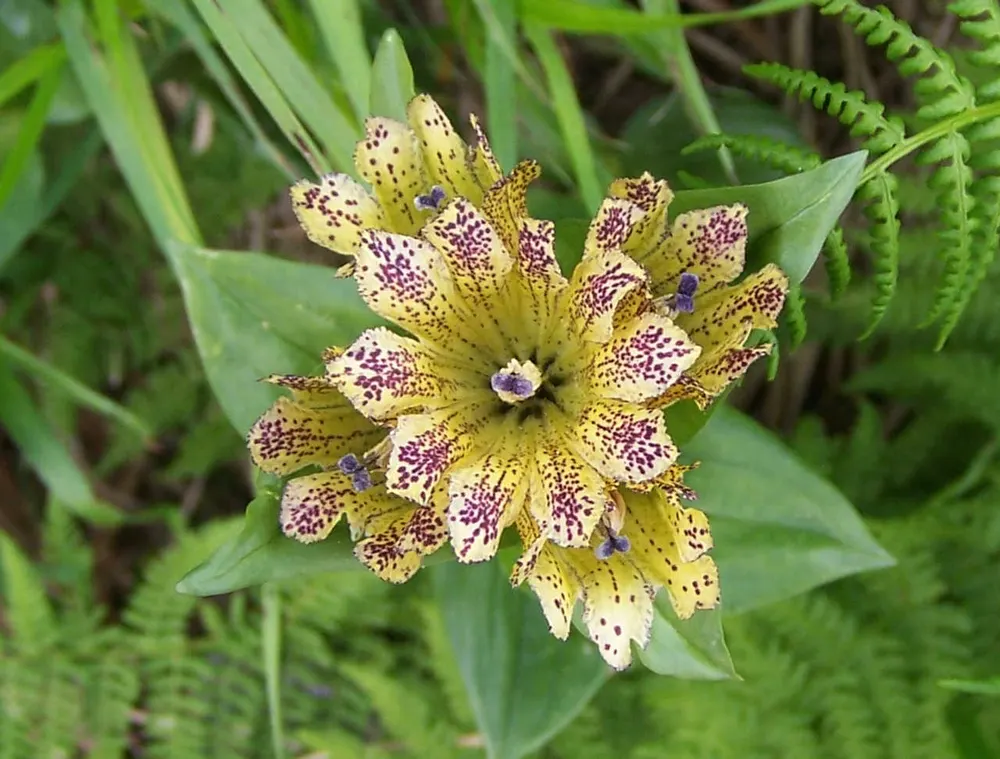
Photo: Opioła Jerzy, CC BY-SA 3.0 (via Wikimedia Commons)
Spotted Gentian
Gentiana punctata
Also known as Spotted Gentian, Alpine Gentian, Gentiane ponctuée
Key benefits
✦Traditional uses
✦Spotted gentian grows high in the mountain meadows of the Alps and the Balkans, where its intensely bitter root has long been gathered alongside its more famous cousin, yellow gentian, for the same purpose: waking up a tired appetite before a meal. Alpine herbalists and farmhouse healers steeped the dried root in wine or water and took a small dose to settle the stomach and get digestion moving again. It also found its way into the region's traditional bitter liqueurs and digestifs, a use that survives in mountain villages to this day. Because the plant grows slowly and can take years to flower, it was always treated as a modest, respected resource rather than something to gather carelessly.
How to grow & use it
✦The full apothecary for Spotted Gentian
Traditional remedies and step-by-step preparations, a complete growing guide, and how to harvest, dry, and store it, all unlocked with HerbLens Unlimited.
- ✦Remedies & preparations
- ✦ Growing guide
- ✦Harvest & storage
From under $6 a month. Free plant identifications always included.
- ✦Wormwood
- ✦Dandelion root
- ✦Orange peel
- ✦Gentiana lutea (yellow gentian)
- ✦Angelica root
“When appetite has gone quiet and digestion feels slow to start, this alpine bitter has long been the mountain herbalist's first call.”
The species name punctata means "spotted" in Latin, a nod to the dark purple flecks scattered across its otherwise butter-yellow petals, a marking that makes it easy to tell apart from its plain-flowered gentian relatives even from a distance on an alpine hillside.
Gentian's intense bitterness stimulates stomach acid, so it can worsen ulcers, gastritis, or acid reflux, and it's traditionally avoided during pregnancy and with high blood pressure.