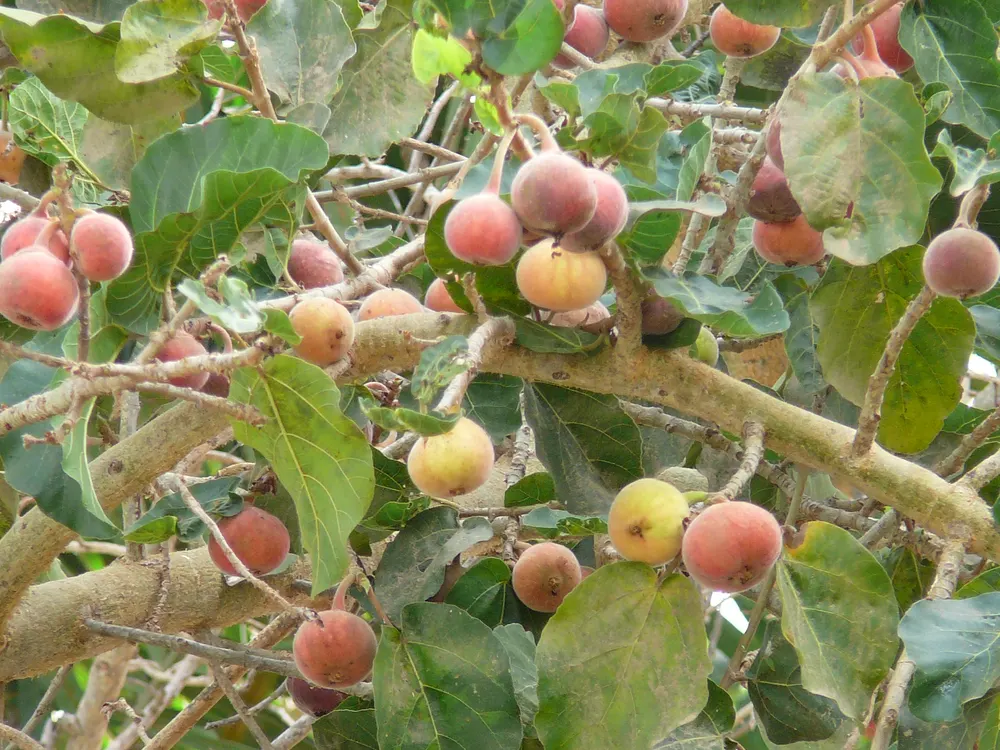
Photo: Atamari, CC BY-SA 3.0 (via Wikimedia Commons)
Sycamore Fig
Ficus sycomorus
Also known as Fig-Mulberry, Egyptian Sycamore, Sycamore Fig Tree, Mulberry Fig
Key benefits
✦Traditional uses
✦Long before it appeared in botanical texts, the sycamore fig was already sacred. Ancient Egyptians planted it beside tombs and temples as an offering to Hathor, the goddess known as the Lady of the Sycamore, and believed its shade sheltered the souls of the dead on their journey into the afterlife. Beyond its spiritual weight, the tree fed entire communities, its fruit eaten fresh, dried, or pressed into cakes, while healers across Africa and the Middle East steeped its bark and leaves for digestive complaints and applied its latex to wounds, warts, and skin troubles. It remains a fixture of village life today, a shade tree, a food tree, and a medicine cabinet all in one trunk.
How to grow & use it
✦The full apothecary for Sycamore Fig
Traditional remedies and step-by-step preparations, a complete growing guide, and how to harvest, dry, and store it, all unlocked with HerbLens Unlimited.
- ✦Remedies & preparations
- ✦ Growing guide
- ✦Harvest & storage
From under $6 a month. Free plant identifications always included.
- ✦Ginger
- ✦Mint
- ✦Honey
- ✦Common Fig (Ficus carica)
- ✦Baobab bark
“For the shade, sweetness, and quiet sanctity of one of the oldest trees people have ever gathered beneath.”
The wood of the sycamore fig was prized by ancient Egyptians for building coffins because it was believed nearly incorruptible, and archaeologists have found sycamore fig timber still sound inside tombs thousands of years old.
The milky latex of sycamore fig can irritate skin, eyes, and mucous membranes, so avoid direct contact if you have a latex or fig sensitivity. Unripe fruit or concentrated bark and leaf preparations may cause digestive upset in excess.