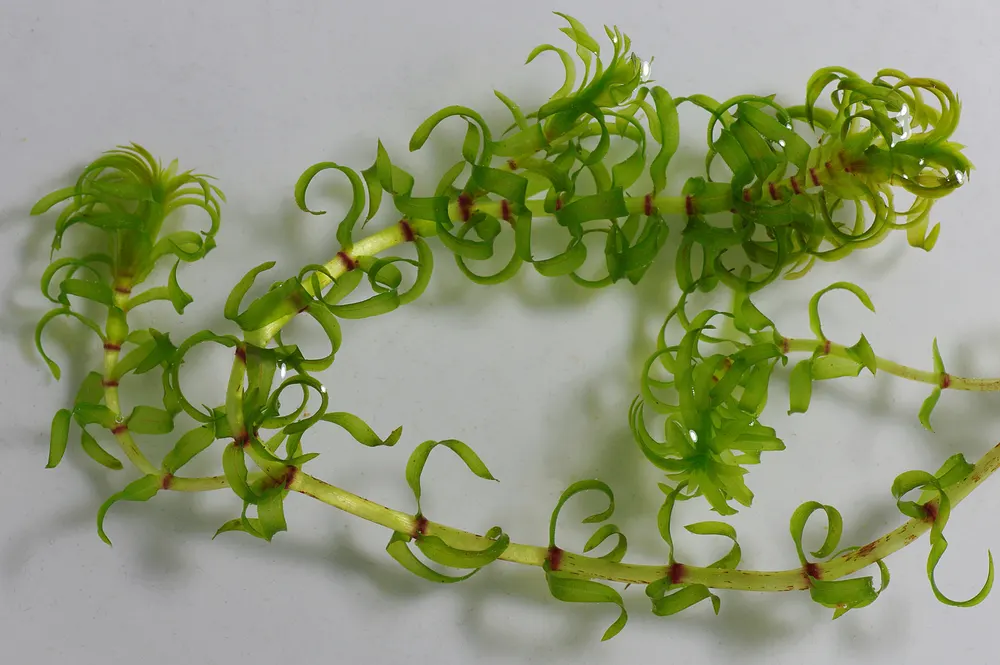
Photo: Christian Fischer, CC BY-SA 3.0 (via Wikimedia Commons)
Western Waterweed
Elodea nuttallii
Also known as Nuttall's Waterweed, Western Waterweed, American Waterweed
Key benefits
✦Traditional uses
✦Western waterweed does not carry the long herbal or culinary history that fills most pages of this atlas. It is not a plant people gathered for the kitchen or the medicine chest. Its real story belongs to still water. For generations, pond keepers and aquarists have prized it as a hardworking oxygenator, a plant that quietly cleans and steadies the water it grows in while giving small fish and their fry a green place to hide. Waterfowl and grazing fish have long fed on its soft, ribbon-like stems, making it a small but steady thread in the food web of ponds and slow rivers.
How to grow & use it
✦The full apothecary for Western Waterweed
Traditional remedies and step-by-step preparations, a complete growing guide, and how to harvest, dry, and store it, all unlocked with HerbLens Unlimited.
- ✦Remedies & preparations
- ✦ Growing guide
- ✦Harvest & storage
From under $6 a month. Free plant identifications always included.
- ✦Elodea canadensis (common waterweed)
- ✦Hornwort
- ✦Water lettuce
- ✦Elodea canadensis
- ✦Egeria densa (Brazilian waterweed)
“For the pond that needs its water breathing clear and its fish somewhere quiet to hide.”
Like its cousin Elodea canadensis, western waterweed spreads almost entirely by broken stem fragments rather than seed, which means a single snapped-off piece drifting downstream can quietly found a whole new colony far from where it started.
Western waterweed is not a plant with an established history of human consumption, and no part of it should be eaten or brewed. It is not known to be toxic on contact, but it has not been evaluated as a food or medicinal herb, so it should be treated as ornamental and ecological only, never as an ingredient. In many regions it is classed as a regulated or invasive aquatic species, so check local rules before introducing it to a pond, and never release aquarium plants or water into natural waterways. As with any plant grown in shared or wild water, keep it away from children and pets who might chew on it, and speak with a local extension office or qualified professional before adding it to a water feature near a natural water source.