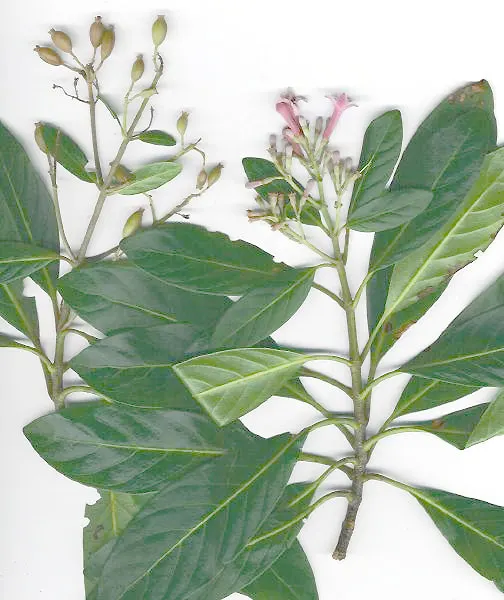
Photo: Public domain (via Wikimedia Commons)
Peruvian Bark (Cinchona)
Cinchona ledgeriana
Also known as Cinchona, Quinine Bark, Jesuit's Bark, Fever Tree, Ledger Bark
Key benefits
✦Traditional uses
✦Long before Europeans arrived in South America, healers in the Andes understood that the bitter bark of certain highland trees could break a fever. When Jesuit missionaries carried this knowledge back across the Atlantic in the seventeenth century, the bark became known simply as the fever tree, and it went on to reshape the course of medicine and empire alike. Cinchona ledgeriana, in particular, was prized above all its cousins because its bark carries an unusually high concentration of quinine, the alkaloid that made it the most effective malaria treatment in the world for nearly three centuries. Charles Ledger's seed collection, smuggled out of Bolivia in the 1860s and planted in Dutch Java, gave this species its name and made it the backbone of the global quinine trade.
How to grow & use it
✦The full apothecary for Peruvian Bark (Cinchona)
Traditional remedies and step-by-step preparations, a complete growing guide, and how to harvest, dry, and store it, all unlocked with HerbLens Unlimited.
- ✦Remedies & preparations
- ✦ Growing guide
- ✦Harvest & storage
From under $6 a month. Free plant identifications always included.
- ✦Gentian root
- ✦Angostura bark
- ✦Citrus peel
- ✦Boneset
- ✦Gentian root
“The bark that broke fevers, built empires, and still commands respect rather than casual use.”
The bitter tonic water that gets mixed with gin exists because of this tree. British colonial officers in malaria-prone regions took daily doses of quinine to ward off the disease, and mixing the bitter powder with soda water, sugar, and a splash of gin made the medicine bearable, giving the world the gin and tonic.
Cinchona bark contains quinine and related alkaloids that are toxic in excess, and even normal doses commonly cause ringing ears, blurred vision, headache, and nausea. Quinine can also trigger dangerous heart rhythm problems and serious allergic or blood reactions, is unsafe in pregnancy, and interacts with blood thinners and heart medications, so it should only be used under direct medical supervision.