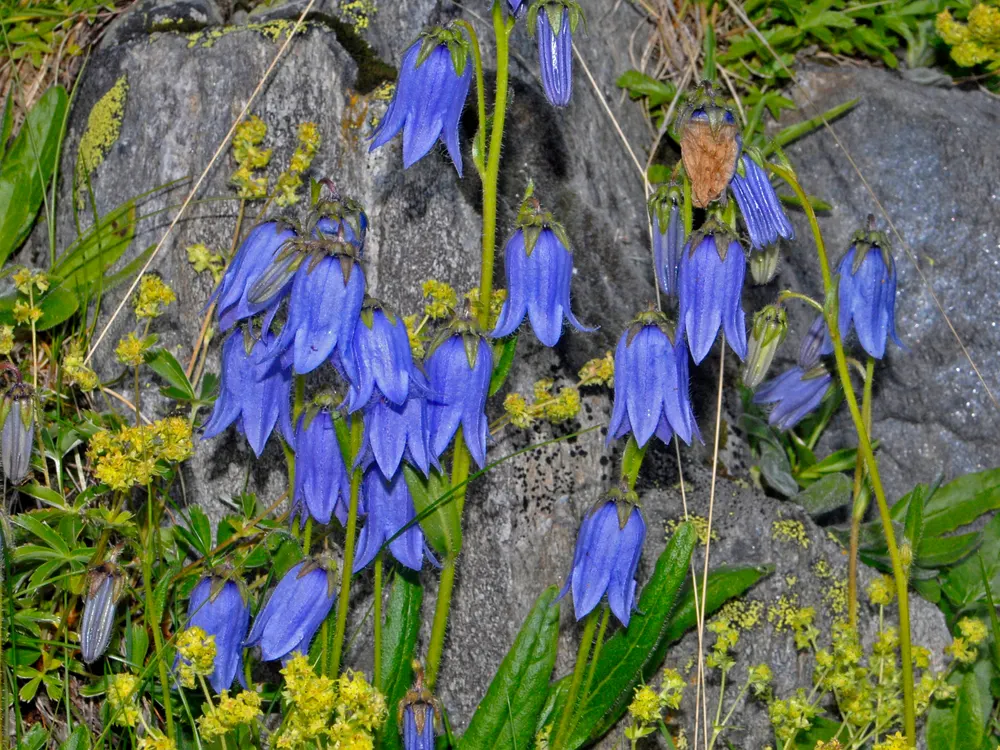
Photo: Hectonichus, CC BY-SA 3.0 (via Wikimedia Commons)
Bearded Bellflower
Campanula barbata
Also known as Bearded Bellflower, Shaggy Bellflower
Key benefits
✦Traditional uses
✦Campanula barbata has long been a familiar sight to shepherds and mountain walkers across the Alps, the Carpathians, and the fells of Scandinavia, where its nodding, hair-fringed bells appear in short-turf pastures each summer. Unlike many of its bellflower cousins, it does not carry a documented history as a food or medicine plant, and it has traditionally been valued instead for its quiet beauty in high, wind-scoured places. Alpine gardeners have long collected and cultivated it for rock gardens and scree beds, prizing its toughness as much as its charm. Its common thread through folklore is simply one of place, a small flower that marks the return of summer to the high meadows.
How to grow & use it
✦The full apothecary for Bearded Bellflower
Traditional remedies and step-by-step preparations, a complete growing guide, and how to harvest, dry, and store it, all unlocked with HerbLens Unlimited.
- ✦Remedies & preparations
- ✦ Growing guide
- ✦Harvest & storage
From under $6 a month. Free plant identifications always included.
- ✦Saxifrage
- ✦Dianthus (alpine pinks)
- ✦Alpine aster
- ✦Campanula carpatica
- ✦Campanula persicifolia
“For the hush of a high alpine meadow, brought down to a garden bed.”
The fine hairs that give this bellflower its 'bearded' throat are not just decorative. Botanists believe they act as a doorway that keeps rain and crawling, nectar-robbing insects out of the flower while still letting bumblebees push through to reach the pollen.
Bearded bellflower has no history of use as food or medicine and shouldn't be eaten; enjoy it as a garden or wild ornamental only.