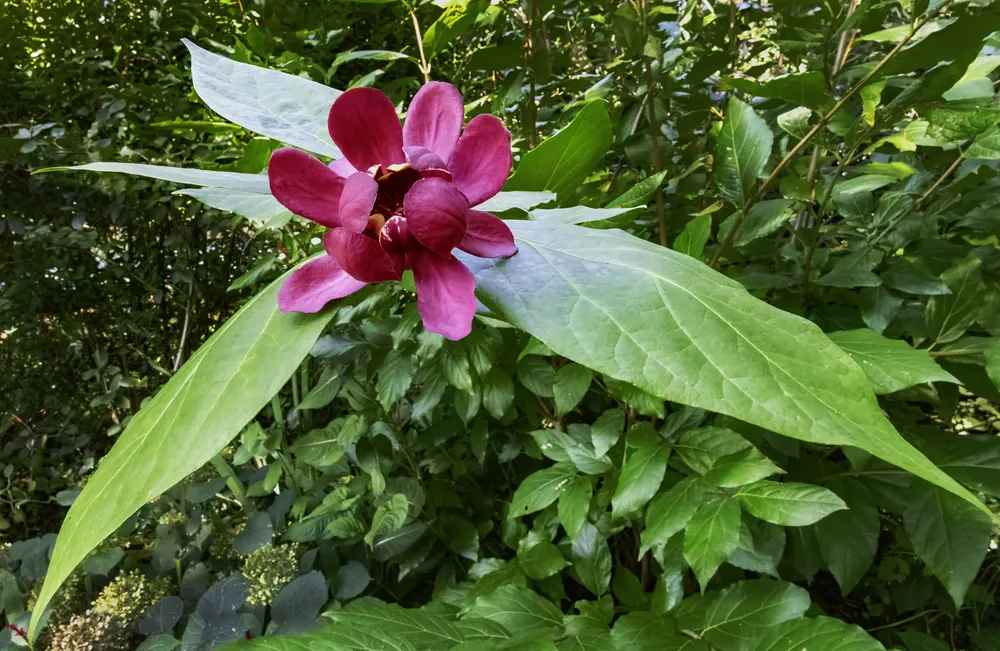
Photo: Didier Descouens, CC BY-SA 4.0 (via Wikimedia Commons)
Carolina Allspice
Calycanthus floridus
Also known as Sweetshrub, Bubby Bush, Strawberry Shrub, Carolina Spicebush
Key benefits
✦Traditional uses
✦Long before it was a garden favorite, Carolina allspice grew wild in the shaded coves of the Appalachian foothills, where its wine-red flowers were prized simply for the way they smelled, a mix of ripe strawberry, banana, and clove that could stop a walker in their tracks. Southern families for generations tucked the blossoms into handkerchiefs and bodices to carry the scent with them, which is where the old country name bubby bush comes from. Early settlers noticed the fragrant bark reminded them of true cinnamon and sometimes dried and powdered it as a kitchen spice substitute, a practice modern botany now advises strongly against. The wood, dense and springy, was also favored by native craftsmen for ramrods and divining rods.
How to grow & use it
✦The full apothecary for Carolina Allspice
Traditional remedies and step-by-step preparations, a complete growing guide, and how to harvest, dry, and store it, all unlocked with HerbLens Unlimited.
- ✦Remedies & preparations
- ✦ Growing guide
- ✦Harvest & storage
From under $6 a month. Free plant identifications always included.
- ✦Oakleaf hydrangea
- ✦Mountain laurel
- ✦Virginia sweetspire
- ✦None for cooking. Despite the folk nickname, it is not a substitute for true allspice, Pimenta dioica, and should never be used as one.
“For a shaded corner that deserves a fragrance no one can quite place.”
The genus name Calycanthus comes from the Greek for cup-flower, but old-time Southern girls had a sweeter name for it: they called it the bubby bush because they pinned the fragrant blooms inside their dresses on warm days, letting body heat coax out more of the spicy-fruity scent.
Every part of Carolina allspice, especially the seeds and bark, contains calycanthine, a toxic alkaloid similar to strychnine that can cause tremors, seizures, and severe illness if eaten. Children have been sickened after mistaking the seed pods for a snack, and livestock have been poisoned browsing the foliage. Grow it only for its beauty and fragrance, keep pods away from children and pets, and call Poison Control immediately if ingestion is suspected.