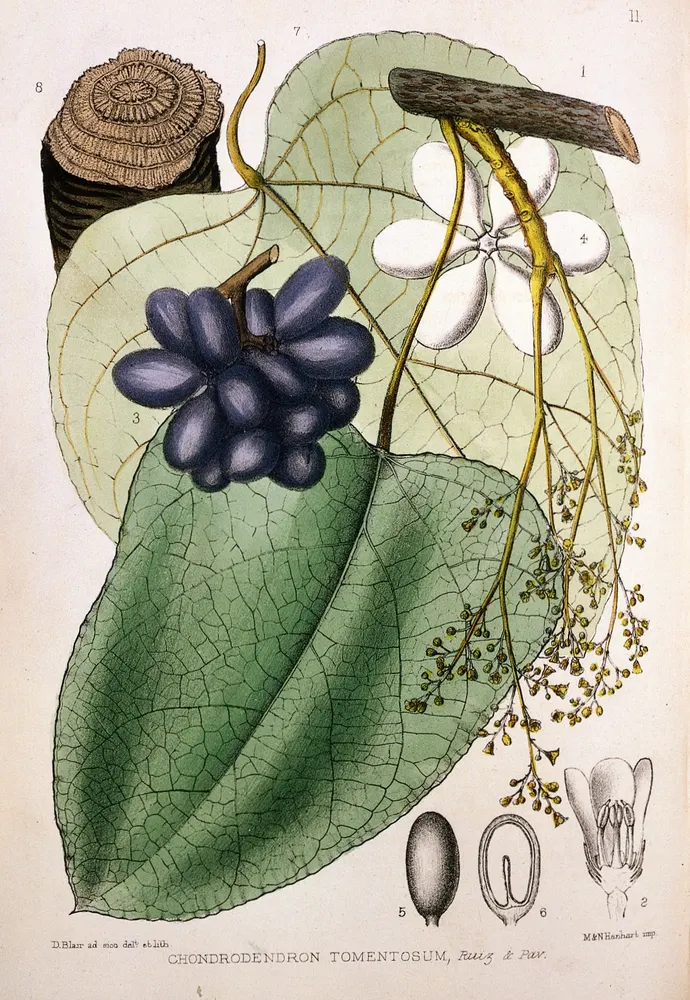
Photo: CC BY 4.0 (via Wikimedia Commons)
Curare Vine
Chondrodendron tomentosum
Also known as Curare, Pareira Brava, False Pareira Root, Ampihuasca
Key benefits
✦Traditional uses
✦Chondrodendron tomentosum is the vine at the heart of true curare, the paralyzing poison that Amazonian hunters simmered down from its scraped bark and root to coat the tips of arrows and blowgun darts. A struck bird or monkey would go still within moments, yet the meat remained safe to eat, since the toxin only turns deadly once it reaches the bloodstream. In the nineteenth century, Western physicians took a very different interest in this same root, drying and tincturing it under the name Pareira Brava as a treatment for urinary and kidney complaints, always under close medical supervision. Its most lasting legacy came in the twentieth century, when chemists isolated d-tubocurarine from the vine and turned it into one of the first muscle relaxants used in modern surgical anesthesia.
How to grow & use it
✦The full apothecary for Curare Vine
Traditional remedies and step-by-step preparations, a complete growing guide, and how to harvest, dry, and store it, all unlocked with HerbLens Unlimited.
- ✦Remedies & preparations
- ✦ Growing guide
- ✦Harvest & storage
From under $6 a month. Free plant identifications always included.
“The vine the forest trusted to still a hunt in silence, and one that later helped surgeons still a patient just as quietly.”
Curare poison is deadly if it enters a wound or the bloodstream, yet nearly harmless if swallowed, which is exactly why Amazonian hunters could safely eat the very animals they brought down with it.
Chondrodendron tomentosum is the classic botanical source of curare, containing d-tubocurarine and related alkaloids that block nerve signals to muscle and can cause paralysis and fatal respiratory failure if they enter the bloodstream, such as through a wound, cut, or injection. This is not a plant to forage, prepare, or ingest at home in any form, including teas, tinctures, or extracts, and it should be kept well away from children, pets, and any broken skin. Its historical use as "Pareira Brava" root was carried out only by trained nineteenth-century physicians under close supervision, not as a home remedy, and it has no safe place in modern self-care. Pregnant or breastfeeding people, and truly everyone else, should avoid this plant entirely. If you are ever curious about its history, chemistry, or pharmacology, please speak with a toxicologist, physician, or other qualified professional rather than attempting any preparation yourself.