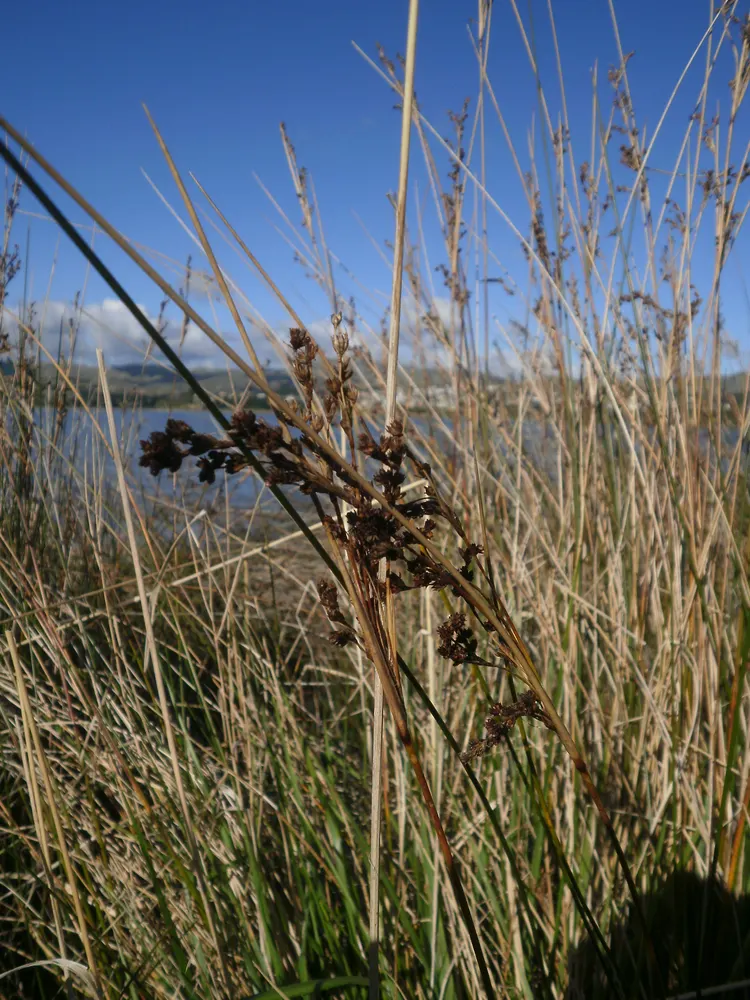
Photo: Rudolph89, CC BY-SA 3.0 (via Wikimedia Commons)
Sea Rush
Juncus kraussii
Also known as Matting Rush, Sea Rush, Searush, Coastal Rush
Key benefits
✦Traditional uses
✦Sea Rush is not a kitchen or medicine cabinet herb. Its real story belongs to the hands of basket weavers. Along the salt marshes of Australia and New Zealand, Aboriginal and Maori weavers have long cut and split its tough, pliant stems to coil baskets, mats, and eel traps, choosing it precisely because its fiber holds up to salt, sun, and constant handling. In South Africa too, coastal communities have gathered it for thatching and plaiting. Its value was always practical and cultural, a plant tied to craft, shelter, and the rhythms of tidal country, rather than to tonics or teas.
How to grow & use it
✦The full apothecary for Sea Rush
Traditional remedies and step-by-step preparations, a complete growing guide, and how to harvest, dry, and store it, all unlocked with HerbLens Unlimited.
- ✦Remedies & preparations
- ✦ Growing guide
- ✦Harvest & storage
From under $6 a month. Free plant identifications always included.
- ✦New Zealand flax (Phormium tenax)
- ✦Sedges (Carex species)
- ✦Cabbage tree (Cordyline australis)
- ✦Soft rush (Juncus effusus)
- ✦Bulrush (Typha species)
“For the salt-scoured edge of a marsh, where a plant needs to hold the bank and give the weaver something worth cutting.”
Maori weavers traditionally used Sea Rush, known as wiwi, alongside harakeke (flax) to coil kete and to construct hinaki, the ingenious woven traps set in estuary channels to catch eels as the tide turned.
Not eaten; its leaves have stiff, sharp edges, so wear gloves when cutting or splitting stems.