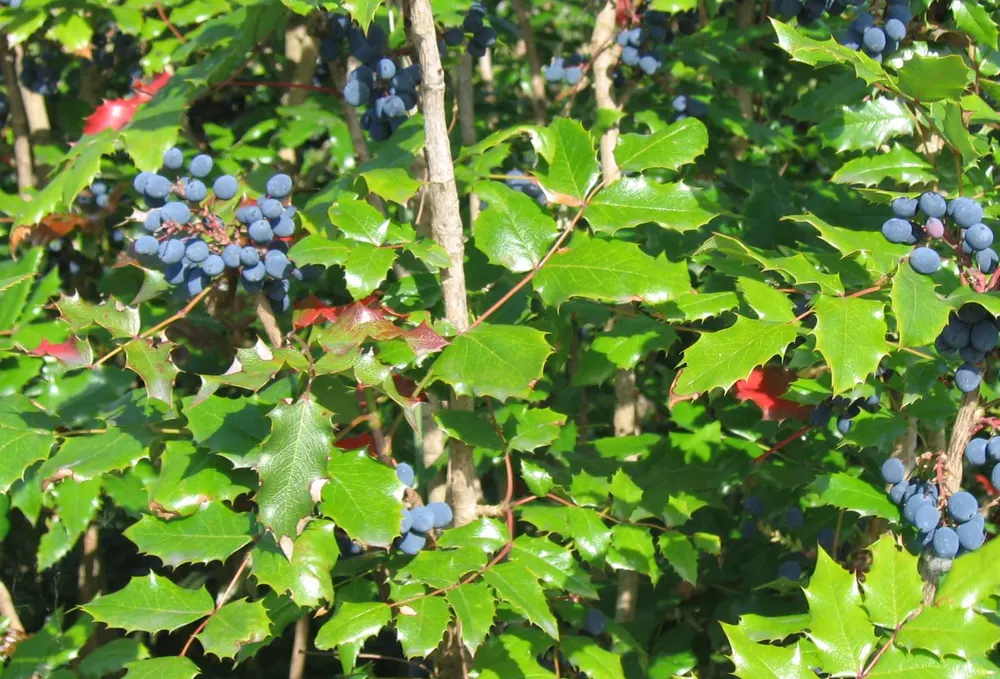
Photo: The original uploader was Meggar at English Wikipedia., CC BY-SA 3.0 (via Wikimedia Commons)
Oregon Grape
Mahonia aquifolium
Also known as Oregon Grape Holly, Holly-Leaved Barberry, Mountain Grape, Tall Oregon Grape
Key benefits
✦Traditional uses
✦Long before it appeared in an apothecary jar, Oregon grape root was dug and simmered by Pacific Northwest peoples including the Coast Salish and Nlaka'pamux, who valued its bitter, golden-yellow root as a tonic for the stomach and a wash for the skin. When nineteenth century Eclectic physicians went looking for a homegrown answer to the increasingly scarce goldenseal, they found it growing wild in the shady understory, a shrub carrying the same bright alkaloid, berberine, in its roots. It settled into Western herbalism as a bitter tonic, taken in small sips to rouse a sluggish appetite before a meal, and its reputation as a gentle stand-in for its more famous, harder-to-find cousin has followed it ever since.
How to grow & use it
✦The full apothecary for Oregon Grape
Traditional remedies and step-by-step preparations, a complete growing guide, and how to harvest, dry, and store it, all unlocked with HerbLens Unlimited.
- ✦Remedies & preparations
- ✦ Growing guide
- ✦Harvest & storage
From under $6 a month. Free plant identifications always included.
- ✦Dandelion root
- ✦Burdock root
- ✦Milk thistle
- ✦Goldenseal (Hydrastis canadensis)
- ✦Barberry (Berberis vulgaris)
“For the bracing, golden-rooted bitter that wakes a tired appetite before supper.”
Oregon grape rose to popularity in the herbal trade largely as a sustainable stand-in for goldenseal, which was being dug up faster than it could regrow in the wild. Sharing the same golden berberine, Oregon grape offered a similar bitter tonic without pushing an already vulnerable plant closer to the edge.
Oregon grape root and bark contain berberine, which is potent even in modest amounts and should be avoided in pregnancy, breastfeeding, and in infants (linked to newborn jaundice). It may affect blood sugar and interact with blood thinners or diabetes medication.