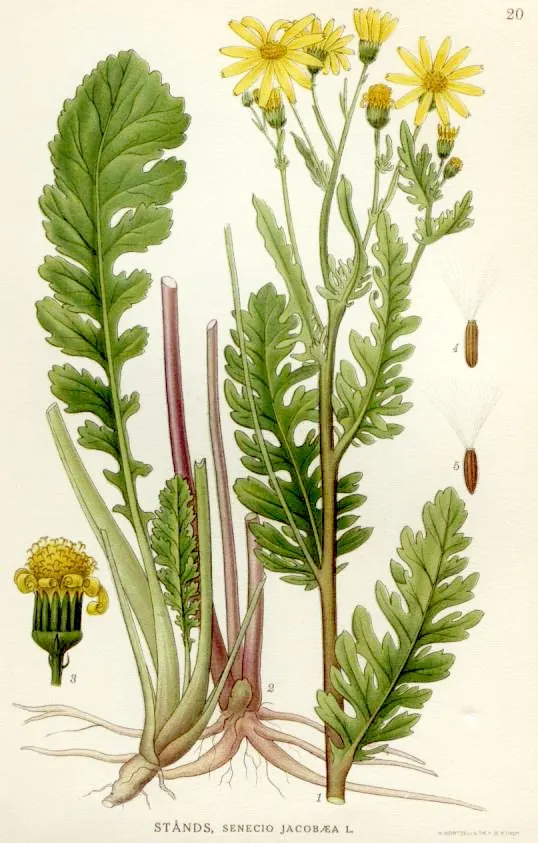
Photo: Carl Axel Magnus Lindman, Public domain (via Wikimedia Commons)
Tansy Ragwort
Senecio jacobaea
Also known as Ragwort, Stinking Willie, St. James's Wort, Cushag, Staggerwort
Key benefits
✦Traditional uses
✦Long before its toxicity was well understood, ragwort found its way into old English and Scottish herbals. Culpeper and other early herbalists described poultices of the bruised leaves applied to sores, burns, and gouty joints, and a gargle made from the plant for sore throats and mouth ulcers. Farmers and shepherds knew it differently, as a plant to pull from the hay field, since it was already suspected of sickening grazing animals. Its old names tell that same double story: St. James's Wort for its midsummer bloom near a saint's feast day, and Stinking Willie, a name folk tradition ties to the crushed, bitter smell of its foliage. Modern science has since confirmed what generations of farmers guessed at, and ragwort has been retired from any responsible herbal use.
How to grow & use it
✦The full apothecary for Tansy Ragwort
Traditional remedies and step-by-step preparations, a complete growing guide, and how to harvest, dry, and store it, all unlocked with HerbLens Unlimited.
- ✦Remedies & preparations
- ✦ Growing guide
- ✦Harvest & storage
From under $6 a month. Free plant identifications always included.
“The weed worth knowing by sight, and never by taste.”
Tansy ragwort's cheerful yellow blooms are the only food the cinnabar moth caterpillar will eat. The striped caterpillars absorb the plant's toxic alkaloids and carry them into adulthood, which is why both the caterpillar and the strikingly red-and-black cinnabar moth are left alone by predators. On the Isle of Man, the same plant, called cushag there, is honored as the island's national flower even though islanders have long been legally required to control it in pastureland.
Tansy ragwort is toxic and should never be eaten, brewed as tea, or used in any home remedy. It contains pyrrolizidine alkaloids that cause cumulative, often irreversible liver damage, and there is no safe ingested dose. This danger does not fade when the plant is dried, which makes contaminated hay or forage a well-documented cause of poisoning in horses, cattle, and other grazing animals. Handling the fresh plant can also irritate the skin of sensitive individuals, so gloves are recommended when pulling it for weed control. It is classified as a noxious or invasive weed in many parts of Europe, North America, and Australasia, and its removal from pastures and hay fields is often required by local regulation. If you suspect a person or animal has ingested this plant, contact poison control, a physician, or a veterinarian right away rather than attempting any home treatment.