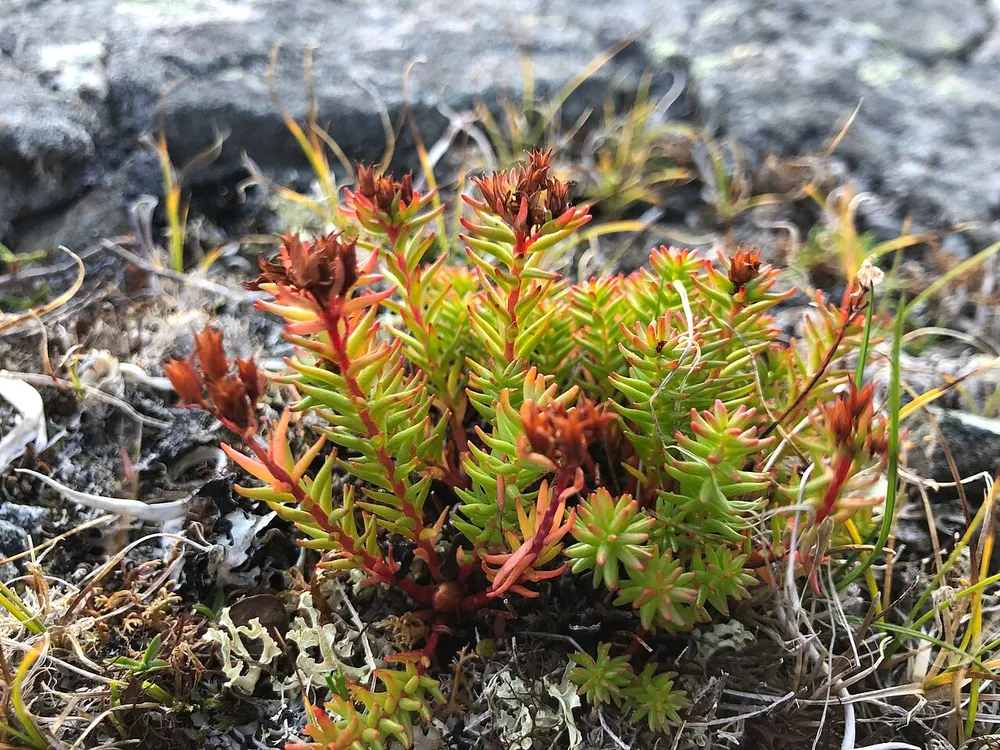
Photo: Valerii Glazunov, CC BY 4.0 (via Wikimedia Commons)
Red Brush Root
Rhodiola quadrifida
Also known as Red Brush, Krasnaya Shchetka, Siberian Red Root, Altai Rhodiola, Four-petaled Rhodiola
Key benefits
✦Traditional uses
✦In the folk medicine of the Altai region, Red Brush has long been gathered by healers as a restorative root, prized above all for women's reproductive and hormonal health, and turned to by men as well for stamina and vitality after hard physical work or illness. Herders and villagers in these high, wind-scoured valleys treated it as a guarded local treasure, often kept within families and passed down as a trusted remedy rather than sold openly. It belongs to the same hardy, high-altitude family as its better known cousin Rhodiola rosea, sharing that clan's reputation for helping the body cope with cold, thin air, and exhaustion.
How to grow & use it
✦The full apothecary for Red Brush Root
Traditional remedies and step-by-step preparations, a complete growing guide, and how to harvest, dry, and store it, all unlocked with HerbLens Unlimited.
- ✦Remedies & preparations
- ✦ Growing guide
- ✦Harvest & storage
From under $6 a month. Free plant identifications always included.
- ✦Rhodiola rosea
- ✦Maca root
- ✦Eleuthero
- ✦Rhodiola rosea
- ✦Maca root
“For the quiet endurance of high stone slopes, when you need steadiness drawn from thin mountain air.”
When the root of Rhodiola quadrifida is cut and dried, it splits into thin, reddish, fiber-like strands that look remarkably like the bristles of a small brush, which is exactly how it earned its Siberian folk name, Krasnaya Shchetka, or Red Brush.
Red brush root has a stimulating, hormone-affecting traditional use, so it is best avoided in pregnancy, breastfeeding, or with hormone-sensitive conditions. It may also interact with blood pressure medication, blood thinners, or sedatives.