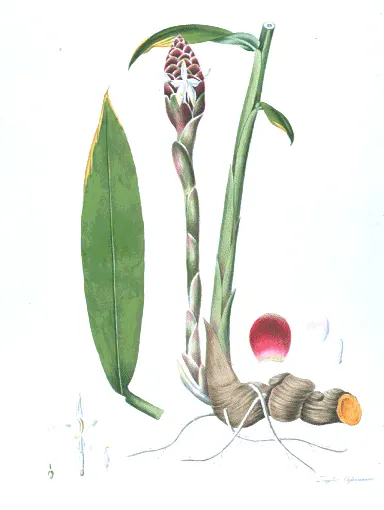
Photo: William Roscoe (Life time: 8 March 1753 – 30 June 1831), Public domain (via Wikimedia Commons)
Cassumunar Ginger
Zingiber purpureum
Also known as Plai, Phlai, Bengal Ginger, Purple Ginger, Zingiber cassumunar
Key benefits
✦Traditional uses
✦Long before it had a Latin name, this fragrant rhizome was a fixture of village medicine chests across Thailand, Bengal, and the wider Indian subcontinent. In Thai traditional medicine it is called plai, and it is best known as the heart of luk pra kob, the steamed herbal compress balls pressed along tired muscles after a long day of farm work or after childbirth. Healers valued its warming, camphor-like aroma and worked it into oils and balms for sore backs, cramped legs, and stiff joints, while home cooks in Bengal sometimes simmered small amounts of the rhizome into digestive tonics. It traveled quietly alongside its more famous cousin, culinary ginger, but earned its own reputation as the herb you reached for after overworked muscles, not upset stomachs.
How to grow & use it
✦The full apothecary for Cassumunar Ginger
Traditional remedies and step-by-step preparations, a complete growing guide, and how to harvest, dry, and store it, all unlocked with HerbLens Unlimited.
- ✦Remedies & preparations
- ✦ Growing guide
- ✦Harvest & storage
From under $6 a month. Free plant identifications always included.
- ✦Turmeric
- ✦Lemongrass
- ✦Kaffir Lime
- ✦Common Ginger (Zingiber officinale)
- ✦Turmeric
“When tired, overworked muscles ask for the warmth of an old healing tradition.”
The rhizome's role as the beating heart of Thailand's luk pra kob compress balls is so central that many Thai massage schools teach the recipe as a rite of passage, and the bundles are traditionally re-steamed and reused across several sessions before their warmth and fragrance finally fade.
Cassumunar ginger is traditionally used externally as an oil or compress; internal use isn't well established, so don't substitute it for common culinary ginger. Patch test any oil or compress first, since concentrated aromatic oils can irritate sensitive skin, and use caution if you're on blood-thinning medication, since strongly aromatic gingers may interact with it.