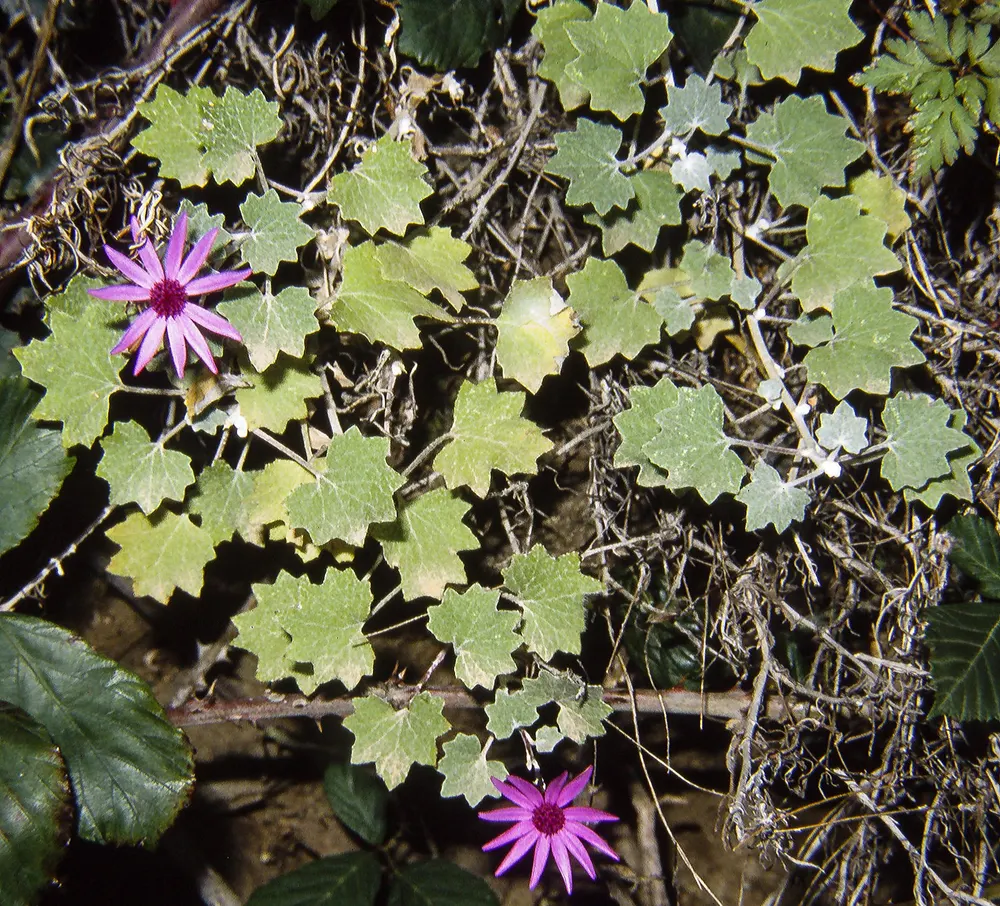
Photo: Peter coxhead, CC BY-SA 4.0 (via Wikimedia Commons)
Woolly Cineraria
Pericallis lanata
Also known as Woolly-leaved Cineraria, Canary Island Groundsel
Key benefits
✦Traditional uses
✦Pericallis lanata has no documented history as a medicinal or culinary herb. It is treasured instead as one of the wild, woolly-leaved cousins of the florist's cineraria that brightens grocery store shelves each winter, a reminder that this cheerful houseplant traces its roots to windswept volcanic cliffs. On its native island of La Palma, botanists and gardeners alike have long admired it simply for its beauty and its resilience in a harsh, rocky home. Its felted, silver-gray leaves and jewel-toned flowers have earned it a quiet but devoted following among growers of Macaronesian and succulent-adjacent plants.
How to grow & use it
✦The full apothecary for Woolly Cineraria
Traditional remedies and step-by-step preparations, a complete growing guide, and how to harvest, dry, and store it, all unlocked with HerbLens Unlimited.
- ✦Remedies & preparations
- ✦ Growing guide
- ✦Harvest & storage
From under $6 a month. Free plant identifications always included.
- ✦Aeonium
- ✦Echium
- ✦Sedum
- ✦Florist's cineraria (Pericallis x hybrida), for a similar look in cooler climates
“For a touch of silvery, storm-battered elegance, as if a piece of a volcanic cliffside bloomed in your garden.”
The genus name Pericallis comes from the Greek for very beautiful, and this wild, woolly island native is a close relative of the common florist's cineraria sold as a potted winter flower in supermarkets and garden centers everywhere.
This plant is related to Senecio, a genus known for toxic pyrrolizidine alkaloids that can damage the liver, and should never be eaten or brewed. Treat as ornamental only and keep away from children and pets.