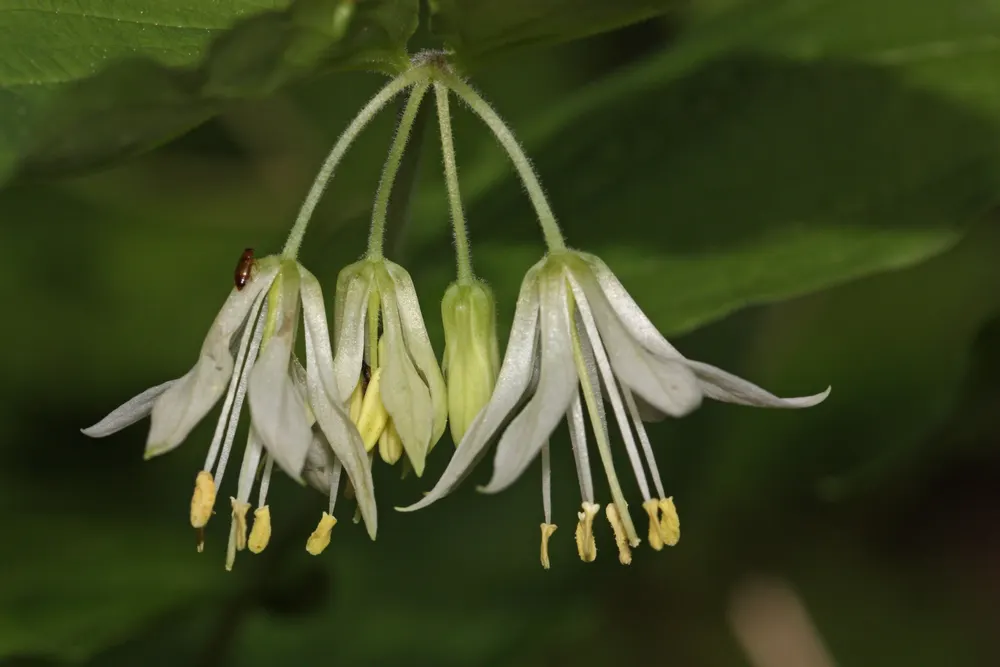
Photo: Walter Siegmund (talk), CC BY-SA 3.0 (via Wikimedia Commons)
Hooker's Fairybells
Prosartes hookeri
Also known as Hooker's fairybells, Drops of gold, Fairybells, Disporum hookeri (former name), Disporum hookeri
Key benefits
✦Traditional uses
✦Hooker's fairybells has always lived quietly at the edges of the record. A few Pacific Northwest Indigenous communities are noted to have occasionally nibbled the ripe orange-red berries as a trailside treat, though most accounts describe them as mild, mealy, and never a food anyone relied on. It never rose to the status of a kitchen staple or a healer's mainstay the way its forest neighbors sometimes did. Its real legacy is as a small, unassuming thread in the deep-shade understory, a plant that deer, birds, and foraging children have crossed paths with for generations, more noticed than used.
How to grow & use it
✦The full apothecary for Hooker's Fairybells
Traditional remedies and step-by-step preparations, a complete growing guide, and how to harvest, dry, and store it, all unlocked with HerbLens Unlimited.
- ✦Remedies & preparations
- ✦ Growing guide
- ✦Harvest & storage
From under $6 a month. Free plant identifications always included.
- ✦Wild ginger
- ✦Sword fern
- ✦Trillium
- ✦Prosartes smithii (broad-leaved fairybells)
- ✦Disporum species grown for similar woodland charm
“For the quiet corner of a shade garden where you want the hush of the forest floor, not a shout of color.”
The genus name Prosartes comes from the Greek for 'suspended,' a nod to how the plant's flowers, and the ovules tucked inside its ovary, hang downward. Look beneath a fairybells leaf in bloom and you will see exactly why: the little bell-shaped flowers shelter shyly underneath the foliage instead of reaching up toward the light like most woodland blooms.
Little is known about Hooker's fairybells as food, and its berries grow among other woodland berries that can be genuinely toxic, so it should not be foraged without expert identification.