Photo: Mount Rainier National Park from Ashford, WA, United States, Public domain (via Wikimedia Commons)
Candystick
Allotropa virgata
Also known as Sugarstick, Candy Cane Plant
Key benefits
✦Traditional uses
✦Candystick has no meaningful record as a medicinal or culinary herb, and honest field guides should say so plainly rather than dress it up. What it has instead is a long history of delighting the naturalists and foragers lucky enough to stumble across it, a peppermint striped wand pushing straight up out of bare forest duff with no leaves and no green in it at all. Nineteenth century botanists were fascinated by it precisely because it broke the rules of what a plant was supposed to do, and that sense of wonder is really the plant's whole legacy. It remains, above all, a small miracle to find rather than a remedy to gather.
How to grow & use it
✦The full apothecary for Candystick
Traditional remedies and step-by-step preparations, a complete growing guide, and how to harvest, dry, and store it, all unlocked with HerbLens Unlimited.
- ✦Remedies & preparations
- ✦ Growing guide
- ✦Harvest & storage
From under $6 a month. Free plant identifications always included.
“For the hush of finding a peppermint striped wand rising alone from the pine duff, one of the forest's odder and more delightful secrets.”
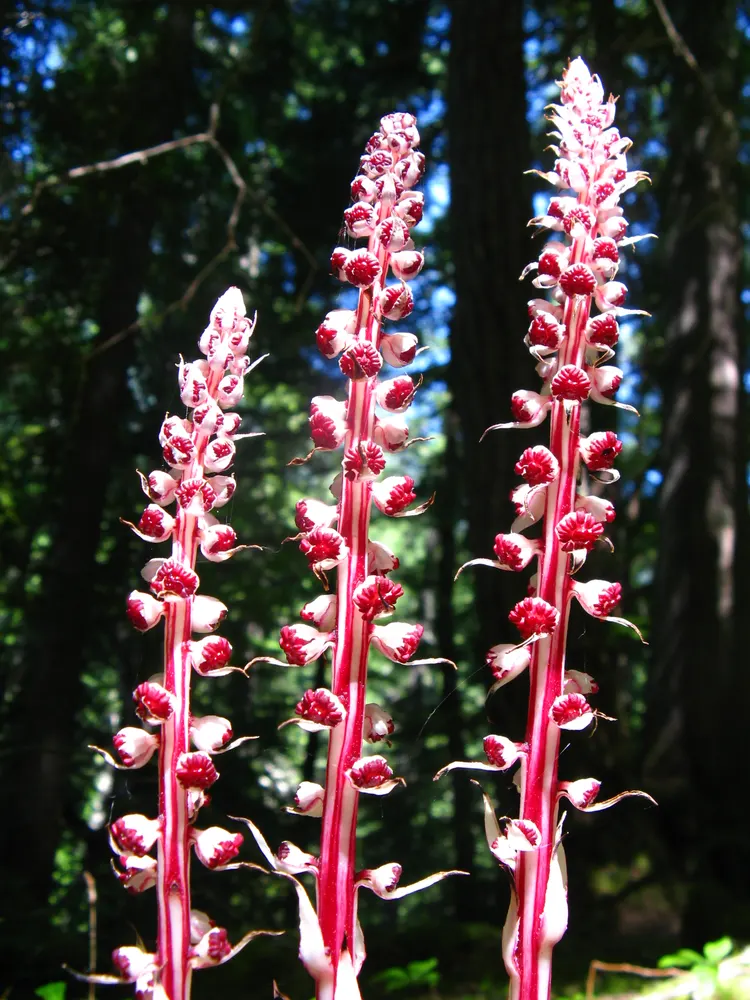
Candystick has no leaves, no roots that touch soil directly for nutrients, and not a trace of green in it, because it does not photosynthesize at all. Instead it taps into a shared underground fungal network, the same one linking the roots of nearby conifers, and quietly siphons off sugars the trees made in their own leaves, making it more of a forest freeloader than a true forager's herb.
This plant has no known history of food or medicinal use and should not be eaten.