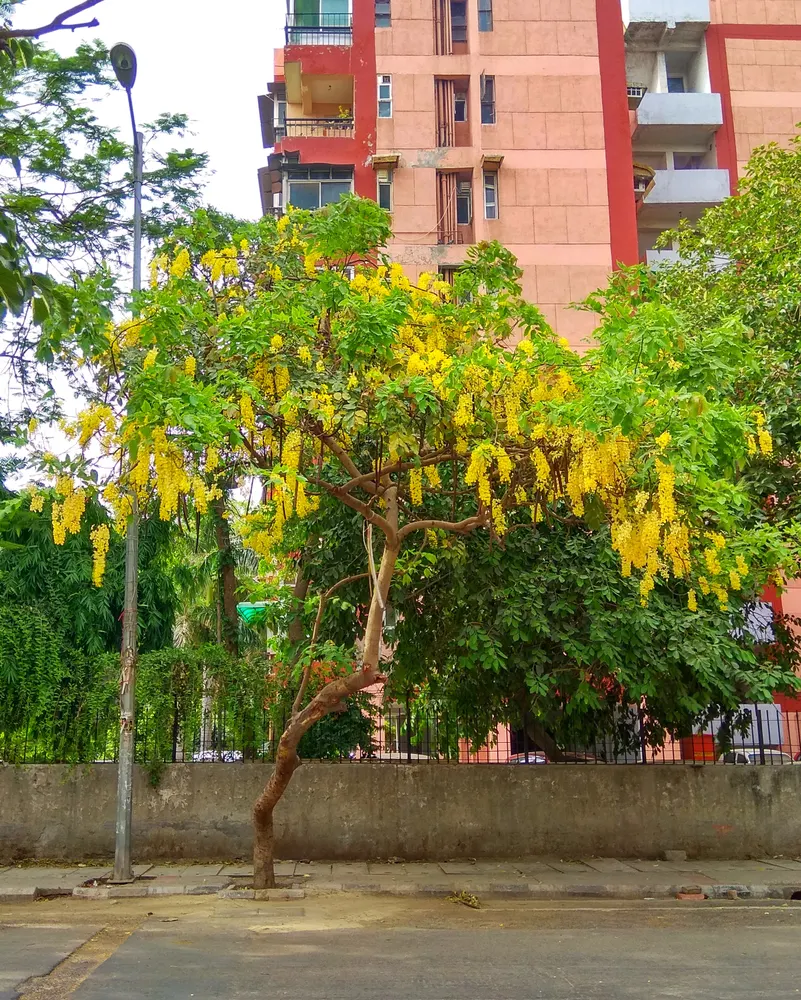
Photo: Banswalhemant, CC BY-SA 4.0 (via Wikimedia Commons)
Golden Shower Tree
Cassia fistula
Also known as Indian Laburnum, Amaltas, Purging Cassia, Ratchaphruek, Konna
Key benefits
✦Traditional uses
✦In Ayurvedic and Unani medicine, the sweet dark pulp found inside the long seed pods of Cassia fistula has traditionally been used as a gentle laxative, valued for being milder in action than some other purgative herbs. Across India and Southeast Asia the tree has long carried meaning well beyond the medicine chest, its golden flowering marking the arrival of the hot season and the New Year in several regional calendars. Various parts of the tree, including the bark and leaves, have also traditionally been applied to the skin in folk practice. Today the tree is grown around the world chiefly for the beauty of its cascading yellow blossoms, which is how most people come to know it first.
How to grow & use it
✦The full apothecary for Golden Shower Tree
Traditional remedies and step-by-step preparations, a complete growing guide, and how to harvest, dry, and store it, all unlocked with HerbLens Unlimited.
- ✦Remedies & preparations
- ✦ Growing guide
- ✦Harvest & storage
From under $6 a month. Free plant identifications always included.
- ✦Senna
- ✦Ginger root
- ✦Licorice root
- ✦Senna leaf
- ✦Triphala
“When the golden racemes are bowing low over the garden wall and you want a gentle, time-honored nudge for a sluggish digestion.”
The golden shower tree is the national tree of Thailand, where its blossoms are called ratchaphruek, and it is also the state flower of Kerala, India, where its blooms (konna poo) are gathered each spring to decorate the shrine at the Vishu New Year festival.
Cassia fistula pod pulp has a long history as a purgative, and like other laxatives it isn't meant for prolonged use, pregnancy, or young children. The seeds inside the pods are more strongly purgative and aren't traditionally eaten, and handling the flowers or fresh pods can irritate skin for some people.