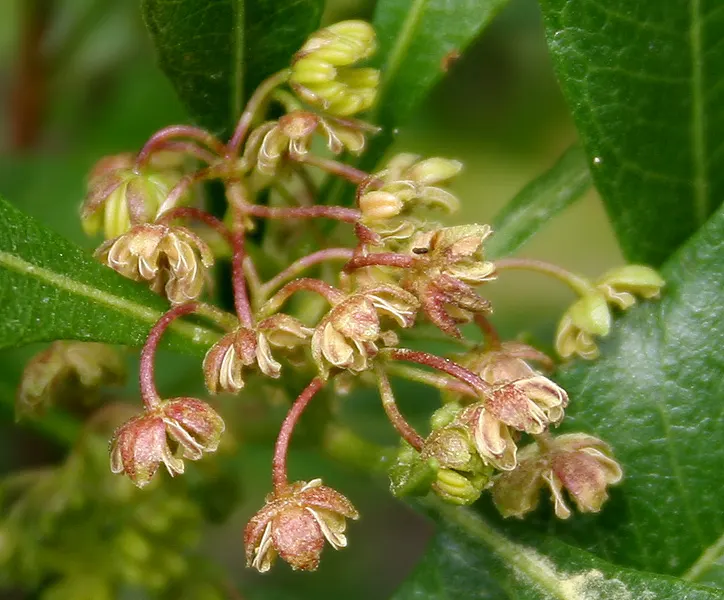
Photo: J.M.Garg, CC BY 3.0 (via Wikimedia Commons)
Sticky Hop Bush
Dodonaea viscosa
Also known as Hopbush, Hop Bush, Native Hop, Switch Sorrel, Sand Olive
Key benefits
✦Traditional uses
✦Sticky hop bush earned its name from early Australian colonists, who steeped its bitter, resin-coated leaves in place of true hops when brewing beer was otherwise out of reach. Long before that borrowed name stuck, the plant already held a place in the daily life of many cultures across its wide native range. Aboriginal Australians chewed or applied the sticky leaves to ease toothache and soothe stings, while traditional healers in parts of Africa and South Asia used leaf washes and decoctions for wounds, fevers, and aching joints. In Hawaii, where the shrub is known as a'ali'i, its tough wood and colorful seed capsules were woven into tools, dye, and lei, a plant valued as much for its resilience as for its healing reputation.
How to grow & use it
✦The full apothecary for Sticky Hop Bush
Traditional remedies and step-by-step preparations, a complete growing guide, and how to harvest, dry, and store it, all unlocked with HerbLens Unlimited.
- ✦Remedies & preparations
- ✦ Growing guide
- ✦Harvest & storage
From under $6 a month. Free plant identifications always included.
- ✦Calendula
- ✦Plantain
- ✦Tea Tree
- ✦Calendula
- ✦Plantain
“For the plant that thrives where little else will, sticky and stubborn, holding fast against salt wind and dry stone.”
In early colonial Australia, hops were scarce and expensive to import, so brewers turned to the bitter, resinous leaves of this shrub as a substitute, which is exactly how sticky hop bush earned its common name.
Sticky Hop Bush has limited safety data for internal use, so it is traditionally used only as an external wash, not taken by mouth. Avoid during pregnancy, breastfeeding, and in young children, and keep it away from the eyes.