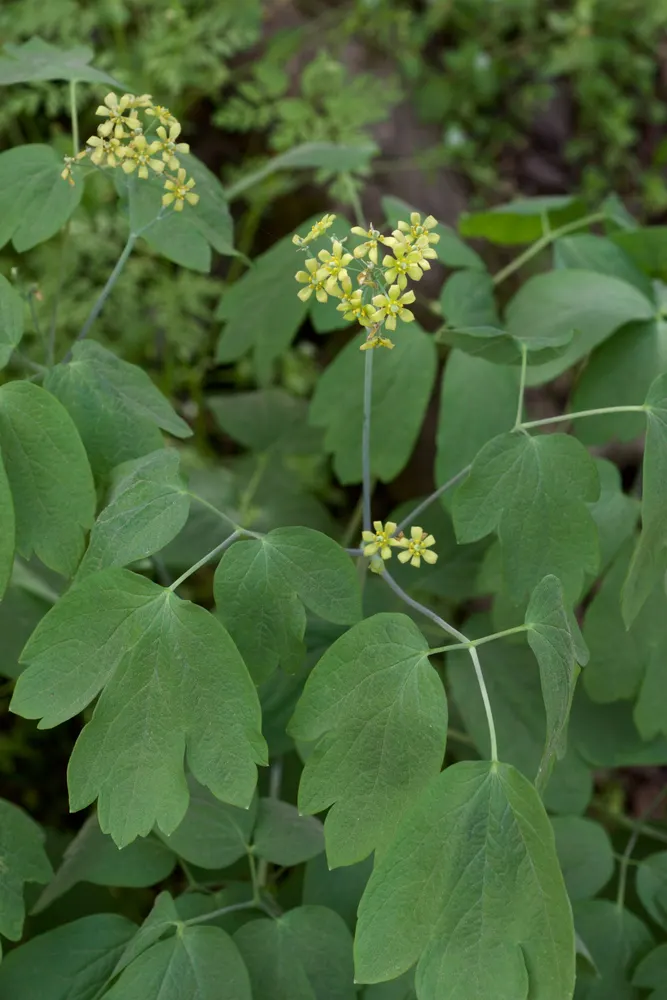
Photo: Eric Hunt, CC BY-SA 4.0 (via Wikimedia Commons)
Blue Cohosh
Caulophyllum thalictroides
Also known as Papoose Root, Squaw Root, Blueberry Root, Yellow Ginseng
Key benefits
✦Traditional uses
✦Blue cohosh earned its old nickname papoose root because generations of Native American midwives, among them Iroquois, Cherokee, and Meskwaki women, turned to its root in the final weeks of pregnancy to help prepare the body for labor. Nineteenth century Eclectic physicians later folded it into their own formularies, prizing it alongside its unrelated look-alike, black cohosh, as a woman's herb. It earns its place in this atlas for that rich history and for its startling beauty in the spring woods, where its smoky blue new growth and clusters of true blue, berry-like seeds make it one of the most recognizable natives of the eastern forest floor. Modern herbalism has since moved firmly away from taking it internally, a story of old trust tempered by hard-won caution.
Growing guide
✦Fresh to dried
✦- ✦None recommended; given its toxicity, blue cohosh should not be substituted into any preparation
“The papoose root of the deep spring woods, once trusted by midwives, now left quietly to the forest.”
The name blue cohosh comes twice over from the color blue, first from the waxy, smoke blue cast of its new spring shoots and leaves, and again from the round, true blue seeds that hang bare on the stalk each fall, since technically they are naked seeds rather than true berries.
Blue cohosh is genuinely dangerous to ingest and is not a kitchen or home-remedy herb. Its root contains cardiotoxic glycosides (including caulosaponin) and teratogenic, nicotine-like alkaloids (such as methylcytisine) that have been linked to serious harm, including heart failure, stroke, and birth defects in newborns whose mothers used it during pregnancy. It has a long history as a labor-inducing herb, but that same action makes it an abortifacient, and it must never be used during pregnancy or while breastfeeding. It is not safe for children, is unsuitable for anyone with heart conditions or on cardiac or blood pressure medication, and has no established safe internal dose. Every part of the growing plant, especially the seeds, is also considered toxic if eaten. This entry is included for its botanical and historical interest only. Please do not attempt to prepare or ingest this plant, and speak with a qualified healthcare provider or clinical herbalist before considering any traditional remedy involving it.