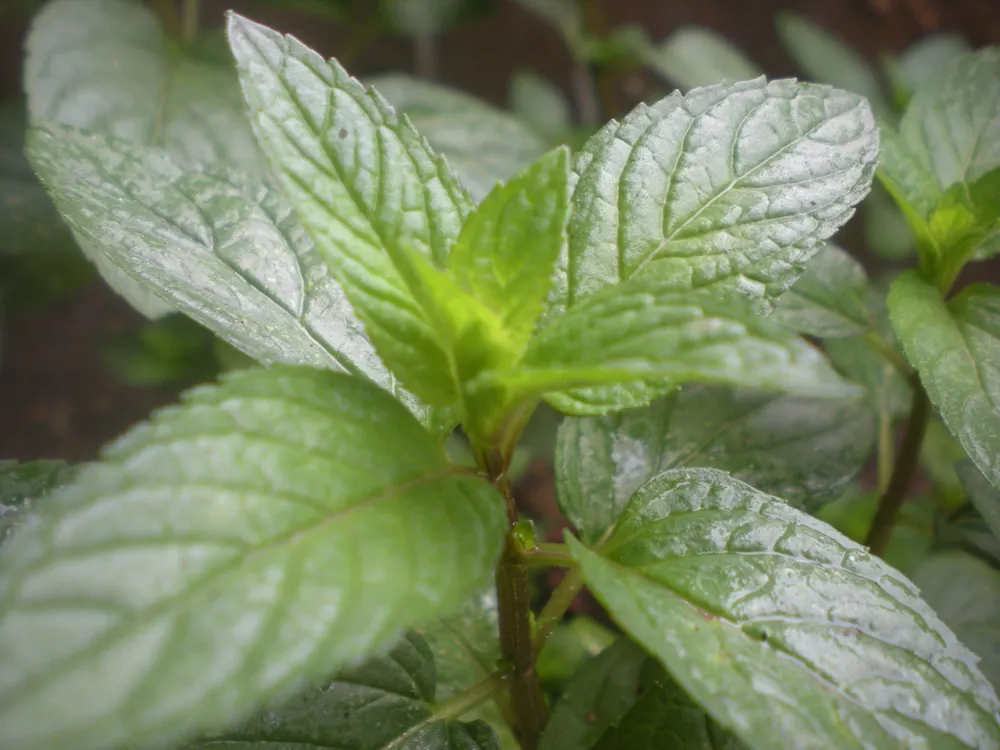
Photo: CC BY 3.0 (via Wikimedia Commons)
Peppermint
Mentha piperita
Also known as Brandy Mint
Key benefits
✦Traditional uses
✦Peppermint is the brisk, cooling cousin in the mint family, a natural cross first noted in England in the 1600s. Its menthol-rich leaves have long been brewed after meals to ease a full or unsettled stomach, to freshen the breath, and to open a stuffy head during a cold. That clean, cooling lift is menthol at work, relaxing tense muscle and carrying a breath of air through the sinuses.
How to grow & use it
✦The full apothecary for Peppermint
Traditional remedies and step-by-step preparations, a complete growing guide, and how to harvest, dry, and store it, all unlocked with HerbLens Unlimited.
- ✦Remedies & preparations
- ✦ Growing guide
- ✦Harvest & storage
From under $6 a month. Free plant identifications always included.
- ✦Ginger
- ✦Fennel
- ✦Chamomile
- ✦Spearmint
- ✦Fennel
“When you feel over-full, or a head cold leaves you stuffy and dull.”
Menthol tricks the body's cold-sensing nerves, which is why peppermint feels cool on the tongue even though nothing has actually dropped in temperature.
Peppermint can worsen heartburn or acid reflux in some people, and concentrated peppermint oil should never be used near the face of infants or young children.