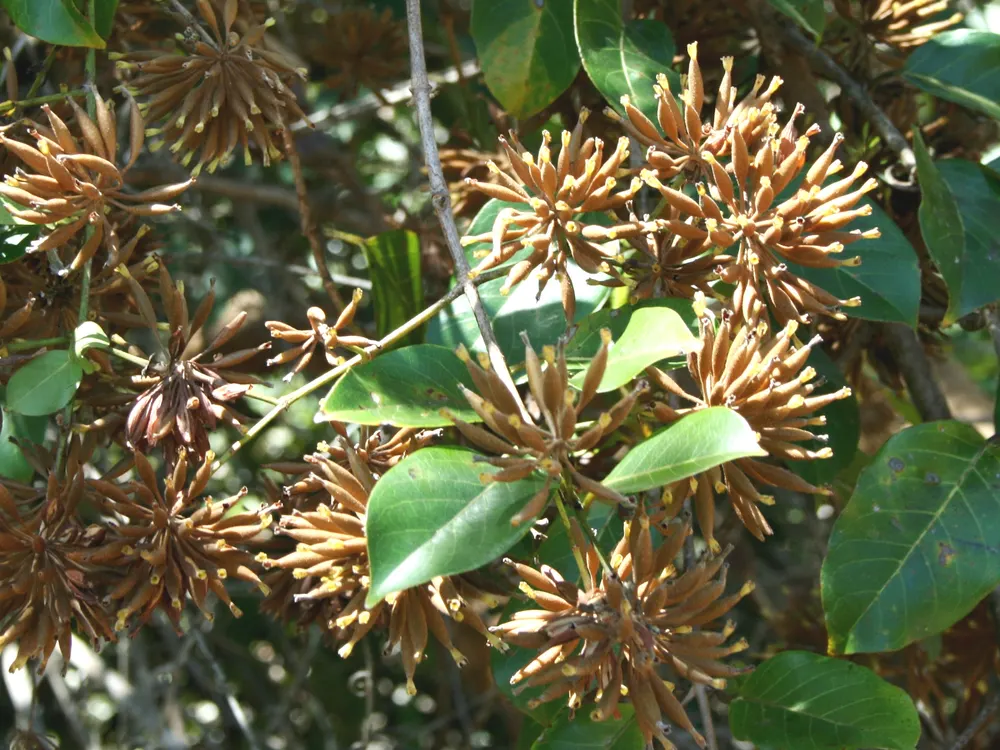
Photo: Vojtěch Zavadil, CC BY-SA 3.0 (via Wikimedia Commons)
Cat's Claw
Uncaria guianensis
Also known as Uña de Gato, Peruvian Cat's Claw, Life-Giving Vine
Key benefits
✦Traditional uses
✦For generations, healers among the Ashaninka and other peoples of the Peruvian Amazon have turned to the woody bark of cat's claw for joint pain, digestive troubles, and as a general tonic to help the body recover after sickness or injury. It was steeped in daily life as much as in medicine, a vine so trusted that some communities called it the life-giving vine. Uncaria guianensis is one of two Amazonian species sold as cat's claw, the other being its close cousin Uncaria tomentosa, and traditional healers have long gathered both under the same name and the same hard-won respect. Its reputation traveled slowly out of the rainforest and into wider herbal use only in the last few decades, but its roots in Amazonian healing run far deeper.
How to grow & use it
✦The full apothecary for Cat's Claw
Traditional remedies and step-by-step preparations, a complete growing guide, and how to harvest, dry, and store it, all unlocked with HerbLens Unlimited.
- ✦Remedies & preparations
- ✦ Growing guide
- ✦Harvest & storage
From under $6 a month. Free plant identifications always included.
- ✦Turmeric
- ✦Ginger
- ✦Echinacea
- ✦Devil's Claw
- ✦Boswellia
“For the ache of well-worked joints, and a body quietly asking to be looked after.”
Cat's claw gets its name from the small, curved thorns that line its stem, hooked just like a cat's claws, which the vine uses to grip onto rainforest trees on its climb toward the canopy light.
Cat's claw is traditionally avoided during pregnancy and breastfeeding, as it was thought to affect the womb. It may interact with immunosuppressant, blood-thinning, and blood pressure medications, and is generally avoided by people with autoimmune conditions like lupus or rheumatoid arthritis.