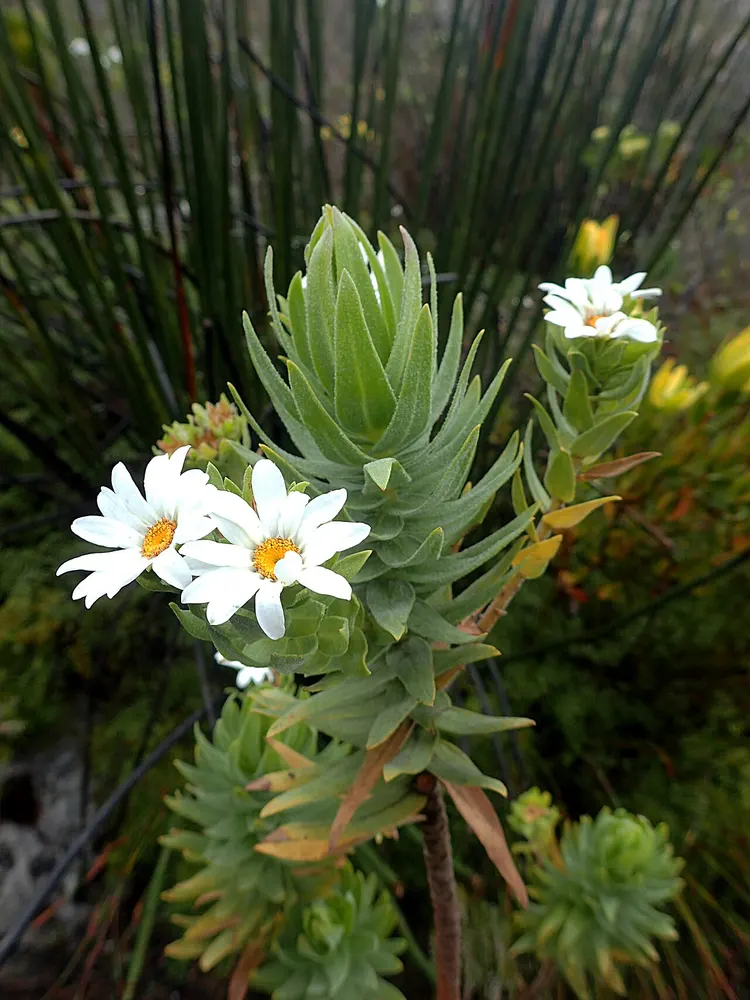
Photo: Dwergenpaartje, CC BY-SA 4.0 (via Wikimedia Commons)
Belmalva
Osmitopsis asteriscoides
Also known as Cape Chamomile, Belskruid, Bell Herb
Key benefits
✦Traditional uses
✦Long before it had a place in any Western herbal, Belmalva grew wild along the cold, tumbling streams of the Cape fynbos, where Khoisan communities and later Cape Dutch settlers came to know its sharp, camphor-sweet scent well. Bundles of the leafy, daisy-flowered stems were burned or steeped as a household remedy for colds, flu, and stubborn chest congestion, the fragrant steam breathed in to help clear the airways. The same infusion was used to wash and dress wounds, and the plant found its way into early Cape household pharmacopoeias as a trusted, homegrown answer to winter ailments. It remains a cherished, if lesser known, part of South African folk herbalism today.
How to grow & use it
✦The full apothecary for Belmalva
Traditional remedies and step-by-step preparations, a complete growing guide, and how to harvest, dry, and store it, all unlocked with HerbLens Unlimited.
- ✦Remedies & preparations
- ✦ Growing guide
- ✦Harvest & storage
From under $6 a month. Free plant identifications always included.
- ✦Chamomile
- ✦Eucalyptus
- ✦Honeybush
- ✦German chamomile
- ✦Yarrow
“When a chill has settled into the chest and you want the misty, camphor-sweet comfort of an old Cape fireside remedy.”
Its old Afrikaans name comes from the tight, rounded flower buds that look like tiny bells before they burst open into white, daisy-like blooms, and Cape settlers once burned bundles of the fragrant leaves indoors as a homely, smoky remedy for colds.
Osmitopsis asteriscoides is not documented as significantly toxic, but as a member of the daisy (Asteraceae) family it can trigger allergic skin or respiratory reactions in people sensitive to ragweed, chrysanthemums, or related plants, so a small skin patch test is wise before topical use. Its essential oils are strongly camphor-like, and concentrated or frequent use, particularly inhaled or taken internally in quantity, has not been well studied for safety, so any use should stay light and occasional. Safety during pregnancy, nursing, and in young children has not been established, so it is best avoided in those cases. As with any lesser-studied, wild-harvested herb, speak with a qualified healthcare provider or herbalist before use, especially if you take medications or manage an existing health condition.