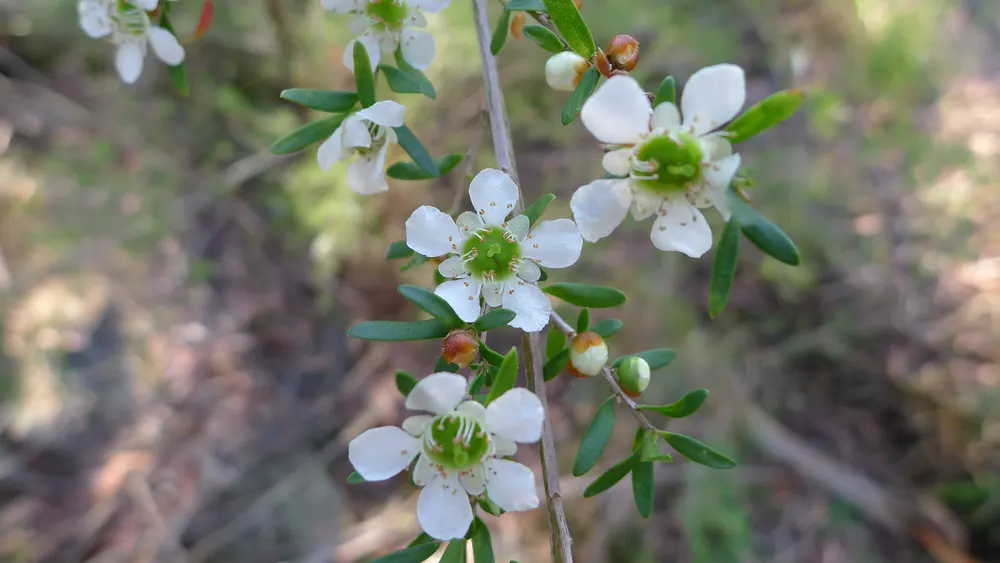
Photo: John Tann from Sydney, Australia, CC BY 2.0 (via Wikimedia Commons)
Yellow Tea-tree
Leptospermum flavescens
Also known as Yellow Tea-tree, Tantoon, Wild May
Key benefits
✦Traditional uses
✦Long before it had a Latin name, this hardy little tree was part of everyday bush life for Aboriginal Australians, who crushed its aromatic leaves and pressed them against cuts, insect bites, and irritated skin, and who inhaled the steam of boiled leaves to help clear a stuffy head. Its story is tangled up with the very name tea-tree, which sailors on Captain Cook's voyages gave to plants in this genus after brewing a rough, fragrant tea from the leaves to fend off scurvy on long ocean crossings. Colonial settlers carried that habit inland, sipping a light infusion much the way they would any bush tea, valuing it for a warming, clearing cup rather than as a treat. Today Leptospermum flavescens still grows wild across its native range, a quiet reminder of how much everyday medicine and comfort once came straight from the hedgerow.
How to grow & use it
✦The full apothecary for Yellow Tea-tree
Traditional remedies and step-by-step preparations, a complete growing guide, and how to harvest, dry, and store it, all unlocked with HerbLens Unlimited.
- ✦Remedies & preparations
- ✦ Growing guide
- ✦Harvest & storage
From under $6 a month. Free plant identifications always included.
- ✦Manuka
- ✦Eucalyptus
- ✦Lemon myrtle
- ✦Manuka (Leptospermum scoparium)
- ✦Tea tree (Melaleuca alternifolia)
“For the hardy, honey-scented shrub that carries the old bushland tea-tree lore in every leaf.”
The common name tea-tree comes from Captain James Cook's crew, who brewed a fragrant, scurvy-fighting tea from the leaves of Leptospermum plants during their 18th-century voyages along the Australian and New Zealand coasts, a habit that stuck to the whole genus ever after.
Yellow tea-tree isn't known to be seriously toxic, but its essential oil is concentrated and shouldn't be taken internally or used undiluted on skin, since it can irritate or sensitize.