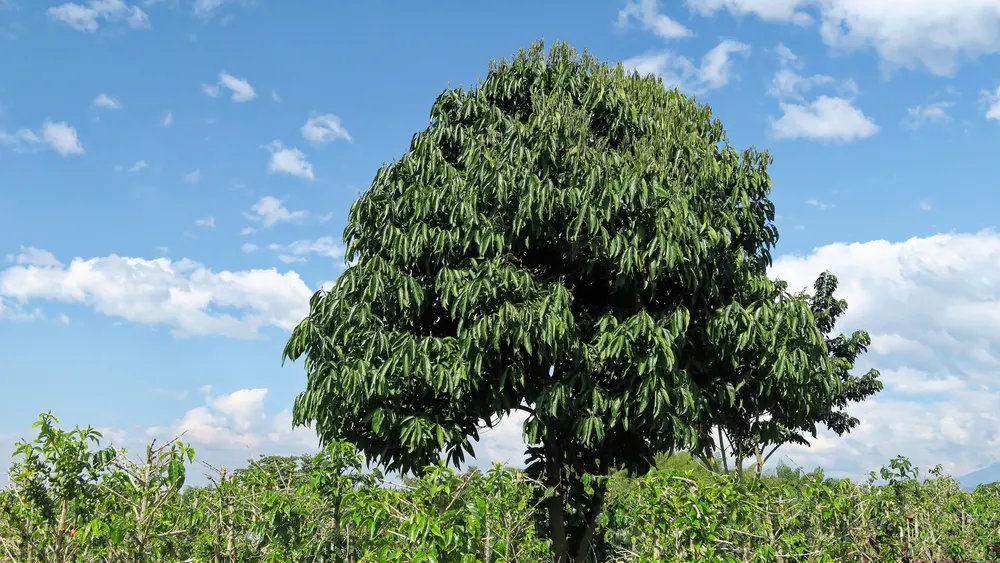
Photo: Burkhard Mücke, CC BY-SA 4.0 (via Wikimedia Commons)
Ice Cream Bean
Inga edulis
Also known as Guama, Guaba, Pacae, Inga, Joaquiniquil
Key benefits
✦Traditional uses
✦Long before it had an English nickname, Inga edulis was already a fixture of Amazonian home gardens and riverside forests, prized for the sweet white pulp packed inside its long, ridged pods. Amazonian communities have traditionally planted it as one of the first trees in a new clearing, since its roots feed nitrogen back into tired soil while its broad canopy shelters young cacao and coffee seedlings beneath it. Beyond the table, the crushed leaves and bark have traditionally been used in Peruvian and Brazilian folk medicine as a simple first-aid measure for minor skin troubles and digestive upset, passed down as practical, everyday plant knowledge rather than formal medicine. Today it is also central to the Inga alley-cropping movement, a modern reforestation method built directly on this old tree's ancient talent for restoring worn-out ground.
How to grow & use it
✦The full apothecary for Ice Cream Bean
Traditional remedies and step-by-step preparations, a complete growing guide, and how to harvest, dry, and store it, all unlocked with HerbLens Unlimited.
- ✦Remedies & preparations
- ✦ Growing guide
- ✦Harvest & storage
From under $6 a month. Free plant identifications always included.
- ✦Cacao (shade companion in the garden)
- ✦Coffee (shade companion in the garden)
- ✦Vanilla (echoes the pulp's flavor)
- ✦Guama (other Inga species with similar sweet pulp)
- ✦Tamarind (for a comparable fruit-forward sweetness)
“When you want a tree that feeds the family, shades the garden, and heals the soil, all in one generous canopy.”
The pulp's flavor, cool, white, and faintly vanilla-sweet, is exactly why it earned the name ice cream bean, and this same fast-growing, soil-mending nature inspired forester Mike Hands to build an entire alley-cropping system around it to help farmers move away from slash-and-burn agriculture.
Inga edulis is not known to be toxic and its ripe fruit pulp is a widely and safely eaten traditional food throughout South and Central America. As with any legume, people with known legume or peanut sensitivities should introduce it cautiously. The leaf and bark preparations described here reflect old, everyday folk practice rather than clinically studied medicine, and they have not been rigorously tested for safety during pregnancy, nursing, or alongside medications. As always, it is best to speak with a qualified healthcare professional before using any plant medicinally, especially for children, pregnant or nursing individuals, or anyone managing a health condition.