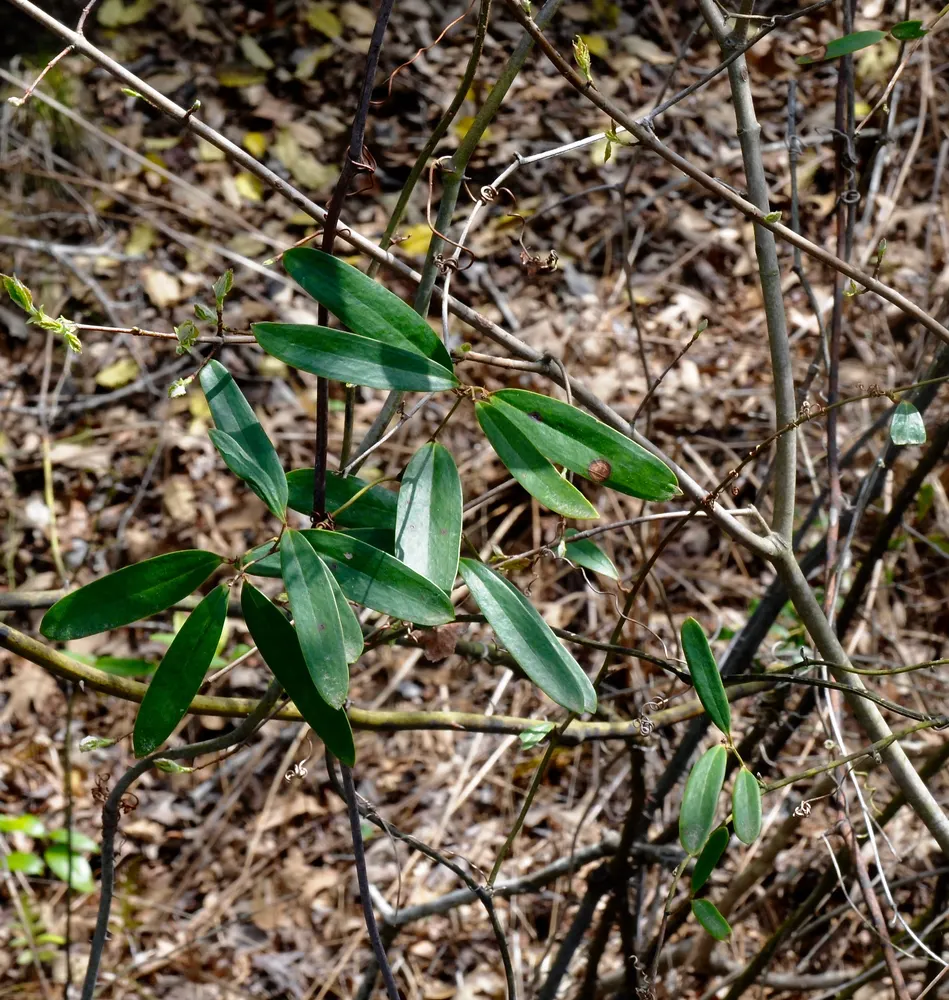
Photo: sonnia hill, CC BY 2.0 (via Wikimedia Commons)
Laurel Greenbrier
Smilax laurifolia
Also known as Bamboo Vine, Blaspheme Vine, Laurel-Leaved Greenbrier
Key benefits
✦Traditional uses
✦Long before it was anyone's garden plant, laurel greenbrier was a working root of the southeastern swamps. Native peoples of the coastal plain dug its tough, tangled tubers, pounded and washed them to release a fine red starch, and used that starch to thicken gruel and bake a rough bread when other food ran short. Later, Southern folk herbalists carried on a tradition shared across the Smilax genus, the same family that gave the world true sarsaparilla, simmering the root into a tonic decoction believed to purify the blood and ease the aches of rheumatism. It was a plant of patience and hard labor, respected as much for its stubborn, thorny defenses as for what its root could offer once a forager got past them.
How to grow & use it
✦The full apothecary for Laurel Greenbrier
Traditional remedies and step-by-step preparations, a complete growing guide, and how to harvest, dry, and store it, all unlocked with HerbLens Unlimited.
- ✦Remedies & preparations
- ✦ Growing guide
- ✦Harvest & storage
From under $6 a month. Free plant identifications always included.
- ✦True sarsaparilla
- ✦Burdock root
- ✦Yellow dock
- ✦True sarsaparilla (Smilax ornata)
- ✦Burdock root
“For the old swamp tonic root, dug slow, thorn-guarded, and simmered with patience.”
Old-timers across the South nicknamed this vine the blaspheme vine, because its thickets grow so dense and thorny that anyone who blundered into one was said to come out muttering words unfit for church.
Laurel greenbrier is not known to be toxic, but its sharp, recurved thorns can cause painful scratches and puncture wounds, so handle the vine and root with care.