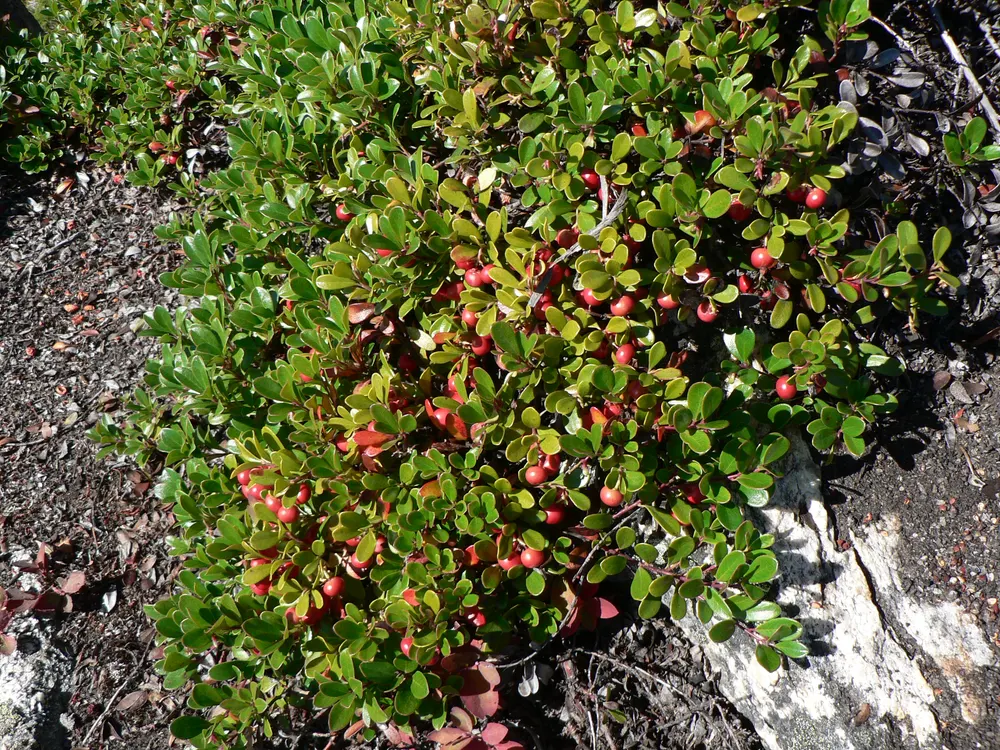
Photo: Walter Siegmund, CC BY 2.5 (via Wikimedia Commons)
Bearberry (Uva Ursi)
Arctostaphylos uva-ursi
Also known as Uva Ursi, Kinnikinnick, Bear's Grape, Mountain Cranberry, Sandberry
Key benefits
✦Traditional uses
✦Bearberry has been leaned on for a very long time as a plain, no-nonsense support for the urinary tract, a use recorded among numerous Indigenous nations of North America and later written into the herbal texts of medieval Wales and Europe by the thirteenth century. Its leathery evergreen leaves were also dried and blended into kinnikinnick, a traditional smoking mixture combined with tobacco and other plants for ceremony and daily use. The name itself comes from the old observation that bears seek out its berries when they emerge from winter dens, a detail folded into both its Latin name and its common one.
How to grow & use it
✦The full apothecary for Bearberry (Uva Ursi)
Traditional remedies and step-by-step preparations, a complete growing guide, and how to harvest, dry, and store it, all unlocked with HerbLens Unlimited.
- ✦Remedies & preparations
- ✦ Growing guide
- ✦Harvest & storage
From under $6 a month. Free plant identifications always included.
- ✦Corn silk
- ✦Cleavers
- ✦Marshmallow root
- ✦Cranberry leaf
- ✦Buchu
“The old cabin-in-the-pines remedy, steeped strong, used sparingly, and respected rather than reached for every day.”
The name kinnikinnick comes from an Algonquian word meaning roughly 'mixture,' and bearberry leaf was one of the most common ingredients dried and blended with tobacco and other plants across many North American Indigenous traditions long before European contact.
Bearberry leaf is high in arbutin, which the body converts to hydroquinone, so traditional use calls for short courses only, generally no more than a week or two at a time. It should be avoided during pregnancy and breastfeeding and by anyone with kidney or liver problems.