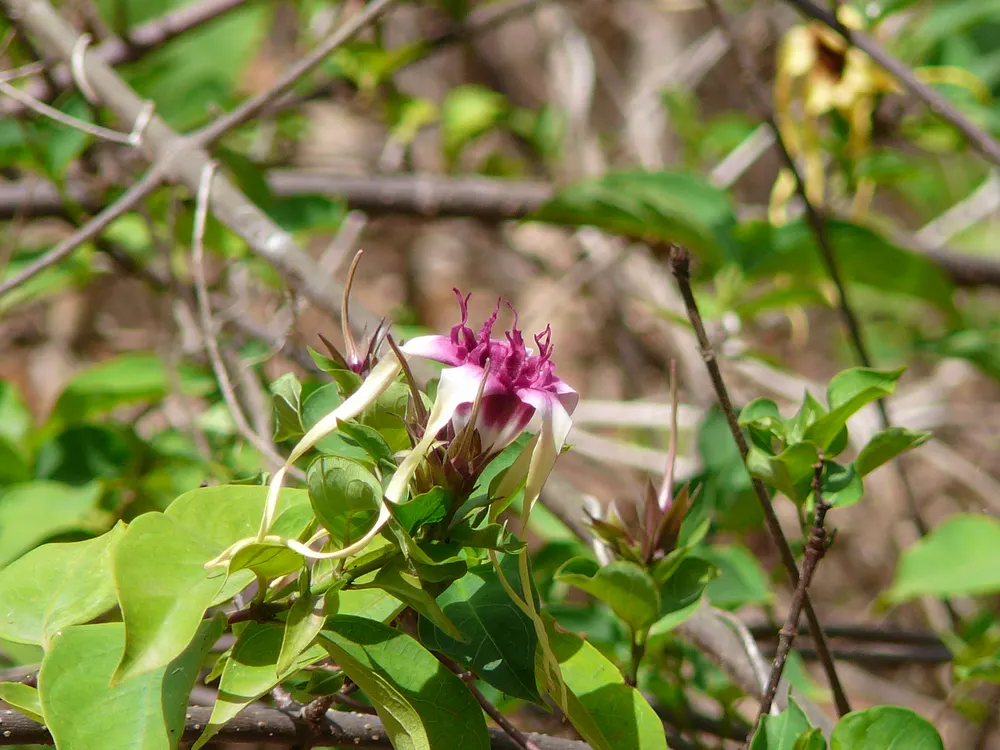
Photo: Atamari, CC BY-SA 3.0 (via Wikimedia Commons)
West African Poison Arrow Vine
Strophanthus sarmentosus
Also known as Sarmentosus strophanthus, Arrow poison creeper, Spider tresses vine
Key benefits
✦Traditional uses
✦For generations, hunters and warriors across West Africa relied on the crushed, boiled-down seeds of this vine to prepare potent arrow and dart poisons, a practice European botanists and explorers recorded with fascination and alarm as far back as the nineteenth century. The vine's unusual flowers, with their long twisting petal tails that seem to spin off into the air, made it just as notable to early plant collectors as its lethal seeds did to chemists. In the mid-twentieth century, Strophanthus sarmentosus took on an entirely new role in industry, becoming one of the principal commercial sources of sarmentogenin, a steroid compound extracted for use in the laboratory synthesis of cortisone and related corticosteroid medicines. It has never held a place in ordinary herbal medicine or the kitchen, and its story belongs to poison lore and pharmaceutical history rather than to traditional tonics or teas.
How to grow & use it
✦The full apothecary for West African Poison Arrow Vine
Traditional remedies and step-by-step preparations, a complete growing guide, and how to harvest, dry, and store it, all unlocked with HerbLens Unlimited.
- ✦Remedies & preparations
- ✦ Growing guide
- ✦Harvest & storage
From under $6 a month. Free plant identifications always included.
In the 1950s and 60s, chemists prized this vine's seeds for a compound called sarmentogenin, which could be converted into cortisone-type steroid drugs more cheaply than other known plant sources at the time, briefly making a plant famous for poison arrows into a quiet workhorse of the pharmaceutical industry.
Strophanthus sarmentosus is a genuinely dangerous plant, not a kitchen or home apothecary herb. Every part, and especially the seeds, contains potent cardiac glycosides (cardenolides closely related to those found in foxglove) that interfere directly with the heart's electrical rhythm. Across West and Central Africa these seeds were historically pounded and boiled down specifically to poison arrow and dart tips for hunting and warfare, a use documented since the earliest European botanical accounts of the plant in the 1800s. Ingesting any part of this plant can cause nausea, dangerous heart arrhythmia, and death, and there is no safe home dose. This entry is included for botanical and historical reference only. If you or someone else has ingested any part of this plant, contact emergency services or a poison control center immediately, and never attempt to prepare, dose, or ingest it based on traditional or folk descriptions.