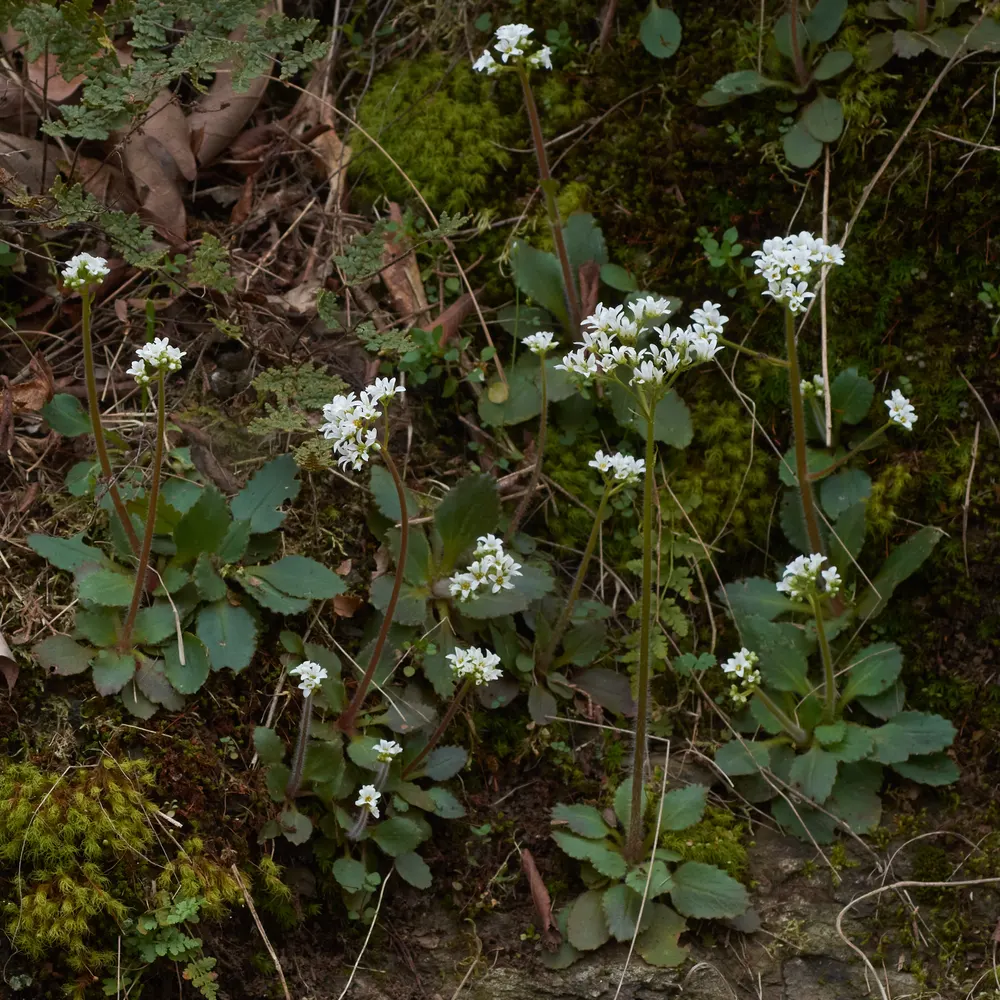
Photo: Eric Hunt, CC BY-SA 4.0 (via Wikimedia Commons)
Early Saxifrage
Saxifraga virginiensis
Also known as Virginia Saxifrage, Rockfoil, Early Saxifrage
Key benefits
✦Traditional uses
✦The genus name Saxifraga comes from the Latin for stone-breaker, saxum meaning rock and frangere meaning to break, a name European herbalists gave the family because they so often found its members rooted directly in cracked stone. Old-world folk healers, following the doctrine of signatures, took this literally and reasoned that a plant with the strength to split rock might likewise help dissolve stones forming in the body, a belief tied mostly to European relatives of this species. Saxifraga virginiensis itself, native to the rocky woodlands and cliffs of eastern North America, was treasured less as medicine and more as a herald, one of the very first flowers colonists and Indigenous communities alike watched for as proof that winter had finally loosened its grip. Its cheerful appearance on bare granite each spring made it a quiet, well loved marker of the turning season long before it found a place in any garden bed.
How to grow & use it
✦The full apothecary for Early Saxifrage
Traditional remedies and step-by-step preparations, a complete growing guide, and how to harvest, dry, and store it, all unlocked with HerbLens Unlimited.
- ✦Remedies & preparations
- ✦ Growing guide
- ✦Harvest & storage
From under $6 a month. Free plant identifications always included.
- ✦Moss phlox
- ✦Wild columbine
- ✦Wood poppy
- ✦Woodland phlox
- ✦Moss campion
“For the first brave flower to bloom on bare stone before spring has fully arrived.”
The whole Saxifraga genus is named for its habit of rooting directly in cracked rock, from the Latin for stone-breaker, which led generations of herbalists to believe, more from hopeful symbolism than proven fact, that the plant could help break stones forming inside the body.
Early saxifrage is not documented as toxic and has no established history of being eaten or used medicinally.