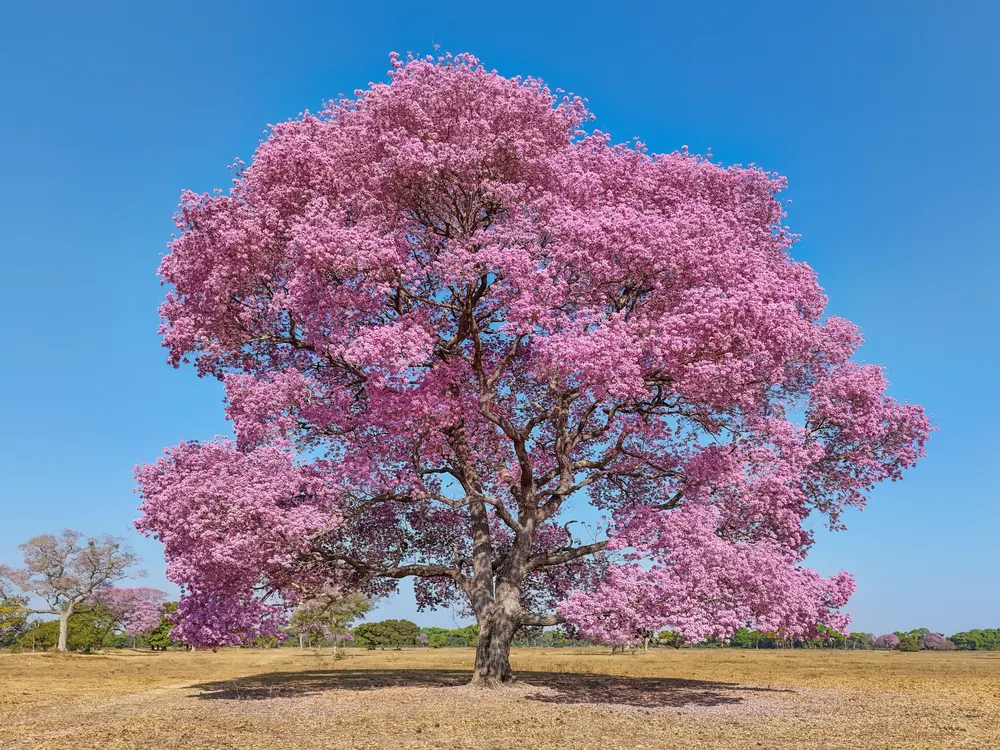
Photo: Giles Laurent, CC BY-SA 4.0 (via Wikimedia Commons)
Pau d'Arco
Handroanthus impetiginosus
Also known as Lapacho, Ipê Roxo, Taheebo, Trumpet Tree Bark, Tajy
Key benefits
✦Traditional uses
✦Long before it had a Latin name, the Guarani people called this tree tajy, meaning to have strength and vigor, and stripped its tough inner bark to brew into a dark, earthy tea. Across the Amazon basin and the Andean foothills, that same bark decoction was passed down through generations as a remedy for fevers, skin troubles, and general run-down health, carried from healer to healer long before Spanish and Portuguese colonists ever wrote it into their own herbals. So central was this tree to daily life that its wood raised houses and its blossoms became a national symbol, and today Pau d'Arco bark travels the world as one of South America's most recognized traditional teas.
How to grow & use it
✦The full apothecary for Pau d'Arco
Traditional remedies and step-by-step preparations, a complete growing guide, and how to harvest, dry, and store it, all unlocked with HerbLens Unlimited.
- ✦Remedies & preparations
- ✦ Growing guide
- ✦Harvest & storage
From under $6 a month. Free plant identifications always included.
- ✦Cat's Claw
- ✦Echinacea
- ✦Ginger
- ✦Cat's Claw
- ✦Echinacea
“For the memory of a bare tree suddenly flushed pink against a dry-season sky, and the dark, grounding cup its bark has poured for generations.”
Pau d'Arco is the national tree of both Brazil and Paraguay, and its wood is so dense and rot-resistant that it has been used for tool handles, bows, and even flooring, all while its flowers put on one of the most spectacular blooms in the South American landscape.
Pau d'arco bark contains compounds that in concentrated doses can cause nausea and blood-thinning effects, so avoid it with anticoagulant medication or a bleeding disorder. It is best avoided in pregnancy and breastfeeding, and traditional, modest preparations are preferable to concentrated extracts.