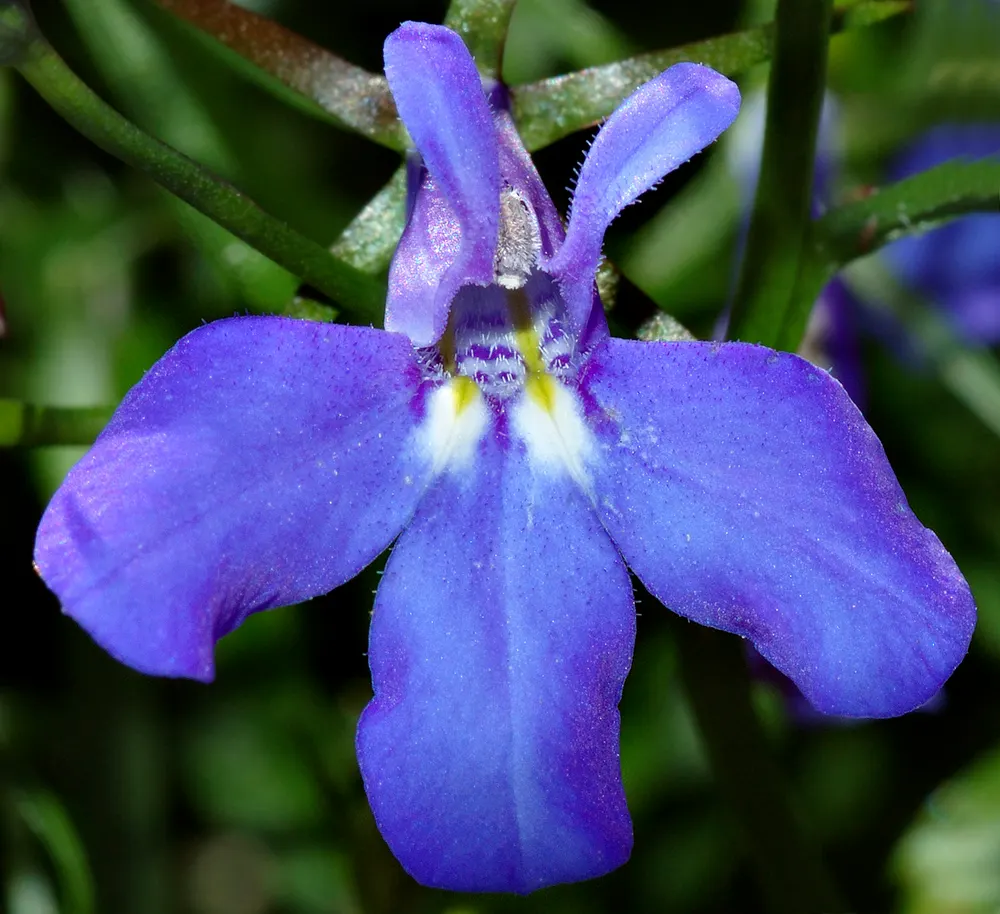
Photo: André Karwath aka Aka, CC BY-SA 2.5 (via Wikimedia Commons)
Edging Lobelia
Lobelia erinus
Also known as Garden Lobelia, Trailing Lobelia, Blue Lobelia (bedding form)
Key benefits
✦Traditional uses
✦Edging lobelia has no real history as a medicinal or culinary herb. Its fame belongs entirely to the garden, where it has been prized since the 1800s as one of the most reliable little bloomers for borders, window boxes, and hanging baskets. It carries the name of Matthias de l'Obel, a Flemish botanist and physician to England's King James I, honored across the whole Lobelia genus for his contributions to botany. While a few of its wilder cousins, especially Lobelia inflata, earned a place in old folk remedies, Lobelia erinus was always the ornamental of the family, chosen for color rather than cure.
How to grow & use it
✦The full apothecary for Edging Lobelia
Traditional remedies and step-by-step preparations, a complete growing guide, and how to harvest, dry, and store it, all unlocked with HerbLens Unlimited.
- ✦Remedies & preparations
- ✦ Growing guide
- ✦Harvest & storage
From under $6 a month. Free plant identifications always included.
- ✦Sweet alyssum
- ✦Trailing petunias
- ✦Bacopa
- ✦Verbena
- ✦Bacopa
“When you want a spill of true blue along a garden edge or tumbling from a window box.”
The entire Lobelia genus, including this cheerful bedding plant, is named for Matthias de l'Obel, a sixteenth-century Flemish botanist who once served as physician to King James I of England.
Lobelia erinus belongs to a genus known for containing lobeline and related alkaloids, and like its relatives it should be treated as unsuitable for eating or brewing into tea. Ingesting plant material from Lobelia species can cause nausea, vomiting, tremors, or more serious effects in sufficient quantity, and the sap may irritate sensitive skin, so it is wise to keep it away from children and curious pets and to wear gloves when handling large amounts of foliage. This entry describes it purely as a garden ornamental, not as an herb for internal use. If you have questions about any Lobelia species or notice a reaction after handling it, please consult a physician, veterinarian, or qualified poison control resource.